ANALYSIS – United States vs France: While the FBI Intensifies Its Hunt for Child Sex Predators, the French Judiciary Remains Paralyzed
ANALYSIS – United States vs France: While the FBI Intensifies Its Hunt for Child Sex Predators, the French Judiciary Remains Paralyzed
By Angélique Bouchard
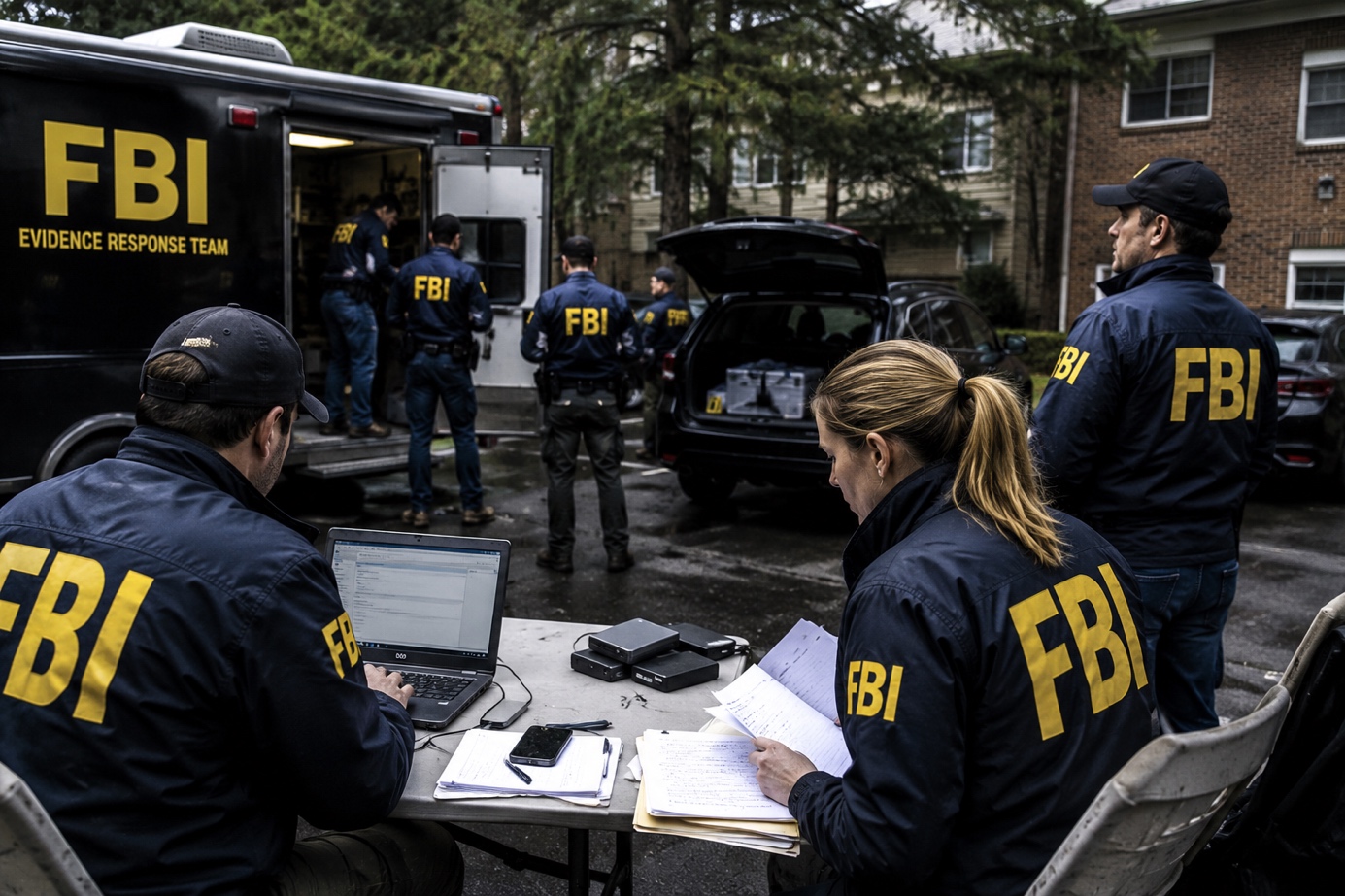
The FBI announced Tuesday the results of a major nationwide operation codenamed Operation Iron Pursuit, which led to the arrest of more than 350 alleged child sex offenders across the United States. More than 200 child victims were located and rescued during the operation, which mobilized all 56 FBI field offices as well as numerous U.S. Attorney’s offices.
This operation is part of a series of coordinated actions carried out by the new FBI leadership, under Director Kash Patel and Deputy Director Dan Bongino, who have made the fight against the sexual exploitation of children one of their top priorities.
While the United States has chosen to respond with a massive and unapologetic law enforcement approach, other countries, such as France, have faced repeated controversies over the role of the judiciary and child protection services. The Lyanna case, in particular, highlighted the limits of an approach sometimes paralyzed by ideological considerations, to the detriment of children’s safety.
A Large-Scale Operation
According to the FBI, those arrested in Operation Iron Pursuit are suspected of serious crimes, including sexual exploitation of minors, sex trafficking, kidnappings, child abuse, and the possession, distribution, or receipt of child sexual abuse material (CSAM).
The operation led to the dismantling of active networks in multiple states. Among the cases highlighted was that of a 10-year-old child from Utah who was abducted by his transgender parent, Rose Inessa-Ethington, and her partner, Blue Inessa-Ethington, and taken to Cuba. According to investigators, the child was supposed to go on a camping trip with the transgender parent, her partner, and another child. Instead, the group traveled from Canada to Mexico and then to Cuba.
The child’s family had expressed serious concerns, fearing that the trip was intended for gender reassignment surgery. The FBI managed to locate the child and reunite him with his mother. Rose Inessa-Ethington and Blue Inessa-Ethington were arrested and charged with international parental kidnapping.
Kash Patel: “We Are Not Slowing Down”
FBI Director Kash Patel welcomed the results of the operation while placing it in a broader context. He recalled that the FBI had already carried out several major operations in the previous year:
• Operation Relentless Justice (December 2025): 293 arrests and 205 children rescued.
• Operation Enduring Justice (August 2025): 234 arrests and 133 children rescued.
• Operation Restore Justice (May 2025): 205 arrests and 115 children rescued.
“Last year, through operations like Relentless Justice, Enduring Justice, and Restore Justice, we set records by identifying over 6,300 child victims and taking more than 300 human traffickers off the streets,” Patel said. “President Trump’s law enforcement team is eliminating these criminal actors at a historic pace, and we are not slowing down.”
Patel stressed that these operations reflected a clear political commitment by the Trump administration to make child protection a national priority.
Dan Bongino: “If You Prey on Children, We Are Coming for You”
FBI Deputy Director Dan Bongino also issued multiple statements on the matter. He announced that, in just the first three months of his tenure, the FBI had conducted two major operations against child sex predators:
• Operation Restoring Justice: 205 child sex predators and 764 individuals involved in child pornography arrested, 115 children rescued.
• Operation Soteria Shield: 244 child sex predators arrested and 109 children rescued.
“This is just the beginning,” Bongino wrote on X. “If you prey on children, we are coming for you.”
Bongino also emphasized that crimes against children remained a top priority for the new FBI leadership, alongside efforts to combat illegal immigration and transnational criminal networks.
High-Profile Cases and Legislative Hardening
Operation Iron Pursuit also led to the arrest of several individuals involved in particularly serious cases. Among them was Alber Rodriguez, 48, accused of sexually abusing a 12-year-old boy and filming the abuse. Manhattan U.S. Attorney Jay Clayton stated: “This office has zero tolerance for those who prey on children.”
Another notable case involved James Strahler II, 37, who pleaded guilty to creating more than 700 AI-generated images depicting the sexual abuse of minors. He became the first person in the United States convicted under the Take It Down Act, a law championed by First Lady Melania Trump that criminalizes the non-consensual distribution of intimate images and deepfake content.
Artificial Intelligence: A New Front in the Fight Against Child Sexual Exploitation
One of the most striking aspects of these operations is the growing use of artificial intelligence, both by criminals and by law enforcement.
The James Strahler II case is particularly revealing. He used more than 100 different AI models to produce over 700 images depicting the sexual abuse of minors, which he then distributed on specialized platforms. He was also prosecuted for cyberstalking after using AI to harass victims.
This case highlights the dual impact of AI:
• On the criminal side, artificial intelligence allows for the mass production of illegal content at low cost and with a reduced risk of traditional identification. It also facilitates the creation of deepfakes for harassment or blackmail.
• On the investigative side, AI complicates the work of law enforcement, which must now develop new skills to detect synthetic content and prove its criminal nature.
The Take It Down Act represents a first legislative response to these developments. By explicitly criminalizing the creation and distribution of non-consensual sexual content generated by artificial intelligence, the law fills a legal gap and enables more effective prosecutions.
The Death Penalty for Child Sex Offenders: An Ongoing Legislative Push
In parallel with FBI operations, several Republican lawmakers have introduced bills aimed at significantly toughening penalties for child sex offenders, including the death penalty.
Representative Nancy Mace (R-SC) introduced the Death Penalty for Child Rapists Act, which seeks to authorize the death penalty for aggravated sexual abuse, sexual abuse of a minor, and abusive sexual contact against children. The bill would also amend the Uniform Code of Military Justice to allow the death penalty for the rape of a child.
The legislation was introduced on February 27, 2026, during the 119th Congress. It represents a new attempt after similar bills introduced in the previous Congress failed to advance. At this stage, the bill remains in the early legislative process and has not yet been passed by the House of Representatives.
Representative Anna Paulina Luna (R-Fla.) has also introduced several related measures. She stated that she had received support from President Donald Trump on the issue.
In Florida, Governor Ron DeSantis had already signed a law in 2023 allowing the death penalty for the rape of a child under 12, challenging the U.S. Supreme Court precedent set in Kennedy v. Louisiana (2008).
These legislative efforts reflect a growing political will to treat the most serious sexual crimes against children as among the “worst of the worst” offenses.
A Clear Political Priority Under the Trump Administration
These operations and legislative initiatives take place in a context where President Donald Trump’s policy on child protection has been clearly defined since the beginning of his second term. Upon returning to the White House, Trump made the fight against the sexual exploitation of minors a key priority of his administration, appointing federal officials — including FBI Director Kash Patel and Deputy Director Dan Bongino — who are firmly aligned with this tough stance.
This policy has translated into strong political support for FBI operations, a willingness to increase penalties (including through bills proposing the death penalty for child rapists), and an effort to modernize criminal law in response to new threats, particularly those posed by artificial intelligence. Unlike more cautious approaches observed elsewhere, the Trump administration has chosen a clear line: criminalize aggressively, pursue relentlessly, and send a strong deterrent message to predators. This political direction largely explains the intensification of federal operations and the acceleration of legislative initiatives in recent months.
*
* *
While the United States, under the impetus of the Trump administration and an FBI led by Kash Patel and Dan Bongino, has chosen a firm and unapologetic criminal repression against sexual predators targeting minors, France remains hindered by a structurally weakened judicial system marked by a powerful corporatism.
The Lyhanna case once again highlighted the limits of a judiciary and child protection services often paralyzed by a mix of ideological considerations and corporatism. In many cases, French magistrates operate within a system where they are practically accountable to no one. Unlike in other countries where mechanisms of responsibility exist, France still largely shields its judges from any real accountability, even in cases of serious errors. The Outreau case remains emblematic in this regard: despite judicial errors with serious consequences and shattered lives, very few magistrates were actually sanctioned or held responsible.
Added to this is a persistent structural weakness: chronic underfunding of the courts, lack of human and material resources in investigations, overloaded court registries, under-equipped prosecutors’ offices, and a judicial slowness that has become structural. In many areas, the French justice system still operates with methods and resources that evoke carrier pigeons, while criminals themselves exploit the most modern technologies, including artificial intelligence.
On the legislative level, the contrast with the United States is equally striking. The Trump administration has multiplied repressive texts, going as far as considering the death penalty for perpetrators of child rape and adopting specific laws against child pornography content generated by artificial intelligence (Take It Down Act). France, for its part, still largely favors a protective and social approach, with generally less severe criminal sanctions and a particularly slow adaptation to new forms of crime linked to AI.
While America arrests hundreds of criminals and toughens its laws, France still seems to hesitate to clearly name the dangers and to punish them firmly. When it comes to the sexual exploitation of children, hesitation is no longer an option. America has chosen its side. Will others follow?