ANALYSIS – Trump Seriously Considering Making Venezuela the 51st U.S. State for Its $40 Trillion in Oil
By Angélique Bouchard
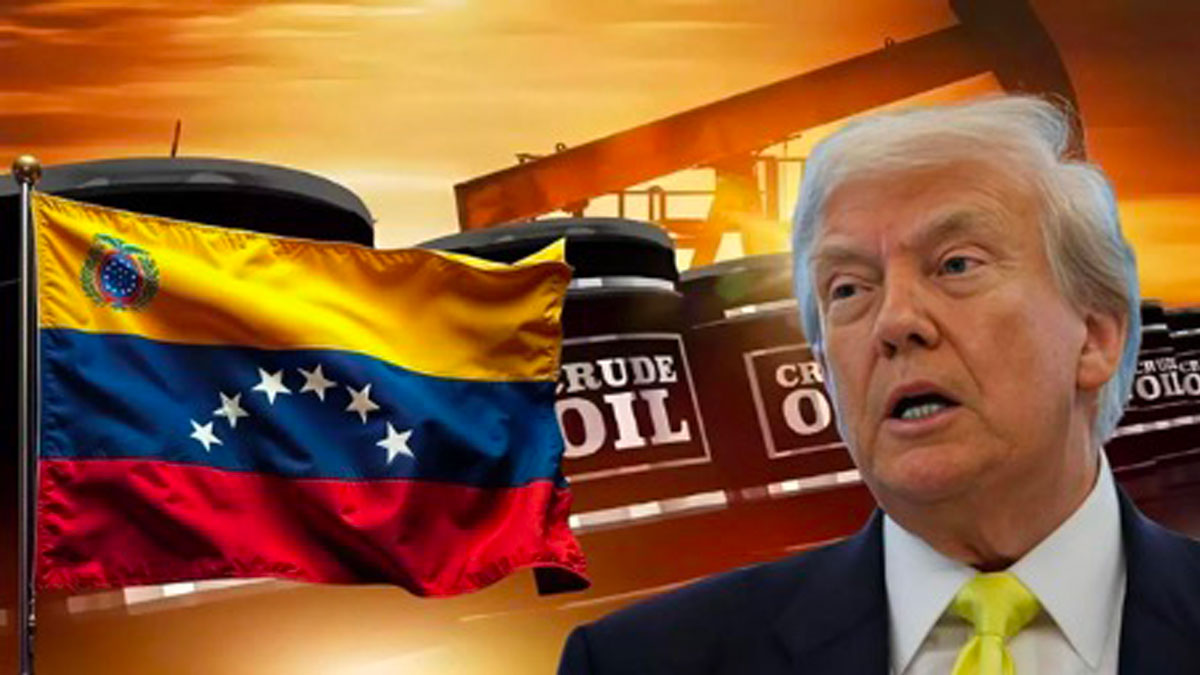
President Donald Trump is seriously studying the possibility of turning Venezuela into the 51st state of the United States. Driven by the country’s colossal oil reserves, valued at some $40 trillion, this bold idea fits squarely into the president’s “America First” strategy.
Following the spectacular capture of Nicolás Maduro by U.S. forces in January 2026, the United States has taken operational control of Venezuela’s oil sector. Exports have already rebounded to more than one million barrels per day in April 2026 — the highest level since 2018.
Trump openly states that the United States will “run” the country during the transitional period and makes no secret of his interest in a deeper integration.
“Venezuela loves Trump,” he declared, highlighting the popularity he enjoys with a significant portion of the Venezuelan population.
The project, still under consideration, nevertheless raises major constitutional debates, sharp reactions in Caracas, and colossal technical questions tied to the exploitation of Venezuela’s heavy oil.
A Bold Plan Powered by Venezuelan Black Gold
Venezuela holds the world’s largest proven oil reserves, estimated at around 300 billion barrels — nearly 20 percent of global reserves and almost four times those of the United States. This potential wealth represents a historic strategic opportunity for Washington. Trump has repeatedly floated the idea of annexation publicly, posting a provocative message on Truth Social: “Good things are happening to Venezuela lately! I wonder what this magic is all about? STATEHOOD, #51, ANYONE?”
Yet fully exploiting these reserves is no simple task. The vast majority of Venezuelan oil is heavy and extra-heavy crude, concentrated in the Orinoco Belt. This crude presents particularly difficult physico-chemical characteristics:
• An extremely high viscosity, sometimes comparable to tar at ambient temperature, making natural extraction almost impossible.
• A very high density (API gravity below 10° for extra-heavy crude).
• A high sulfur content, along with heavy metals (vanadium, nickel) and asphaltenes.
• A low yield of light fractions (gasoline, diesel) and a high yield of heavy residues.
These properties create major technical challenges at every stage of the value chain. Extraction requires advanced techniques such as steam injection, dilution with lighter hydrocarbons, or in-situ heating (SAGD or CSS). Without these methods, well productivity drops very rapidly. Pipeline transport is equally complicated: heavy oil corrodes infrastructure and forms deposits, requiring it to be blended with large volumes of light crude or condensates — dramatically driving up logistics costs.
Even before refining, the crude must undergo heavy upgrading (coking, hydrocracking, desulfurization) to reduce viscosity and impurity content. Venezuela sorely lacks modern refining capacity suited to this type of oil. Years of underinvestment, nationalizations, and the mass exodus of skilled technicians have left facilities in a critical state: leaks, frequent breakdowns, and recurring safety problems.
Since the United States took over management, exports have rebounded, but experts emphasize that returning to a sustainable and profitable production level will require billions of dollars in investment and several years of work. Trump has promised that major American companies — such as Exxon and Conoco, expelled nearly twenty years ago by Hugo Chávez — will return on a massive scale. Regular meetings between Cabinet members and oil executives are already underway to prepare this comeback.
Trump: “We Are Going to Run Venezuela” During the Transition
Following Nicolás Maduro’s capture in January 2026, Trump made it clear that the United States would “run” the country during the transitional period. He is working closely with Vice President Delcy Rodríguez, whom he has designated as a key figure in this interim phase. The president has also publicly raised the possibility of outright annexation.
Such integration would, however, require approval from the U.S. Congress and consent from Venezuela — two conditions that are far from guaranteed. Delcy Rodríguez responded firmly: “That would never be considered, because if there is one thing we Venezuelans have, it is that we love our independence process, we love our heroes and heroines of independence.”
A Constitutional and Geopolitical Firestorm
Trump’s project has ignited intense legal debates in the United States. Some experts argue that annexation would require a congressional vote and could not be decided by presidential decree alone. Others contend that the initial operation to capture Maduro fell under executive authority, but any lasting change in Venezuela’s status would cross a clear constitutional red line.
This is not the first time Trump has floated annexing foreign territories — he has already mentioned Greenland, Canada, Cuba, and Panama. Venezuela stands apart, however, because of its enormous oil reserves and its geographic proximity to the United States.
*
* *
A Daring Bet That Could Redraw the Map of the Americas
By seriously considering the possibility of making Venezuela the 51st U.S. state, Donald Trump is taking his “America First” doctrine to the extreme. The goal is clear: secure a massive energy supply, revive a devastated economy, and project American power into the heart of Latin America. If the project succeeds, it would mark a historic turning point in U.S. foreign policy — far beyond mere military or economic operations.
For now, Venezuela remains a sovereign country in transition, but discussions in Washington show that the idea of deeper integration is no longer taboo. Between geopolitical realities, the colossal technical challenges of heavy oil, and constitutional debates, the Venezuelan dossier could well become one of the most explosive files of Donald Trump’s second term. The world is watching. And Caracas, more than ever, is at the center of the game.
#Trump,#Venezuela,#Maduro,#AmericaFirst,#USPolitics,#Oil,#HeavyOil,#Geopolitics,#LatinAmerica,#ExxonMobil,#ConocoPhillips,#OrinocoBelt,#EnergyCrisis,#USForeignPolicy,#Statehood,#Trump2026,#OilWar,#Petrodollar,#Caracas,#Washington,#Constitution,#USCongress,#Geoeconomics,#EnergySecurity,#OilReserves,#SouthAmerica,#NicolasMaduro,#USVenezuela,#GlobalEnergy,#StrategicResources,#Hydrocarbons,#EnergyMarkets,#PoliticalCrisis,#InternationalRelations,#AmericanEmpire,#BlackGold,#OilIndustry,#Refining,#HeavyCrude,#LeDiplomate