ECONOMY – The Transformation of South Korean Industrial Policy (1997-2025): from the Asian Crisis to Economic Security
By François Souty
« History matters. »
Ha-Joon Chang, Kicking Away the Ladder: Development Strategy in Historical Perspective, London, Anthem Press, 2002, 187 p.
Executive Summary
South Korea’s industrial policy is one of the most remarkable transformations of developed economies since the end of the twentieth century. Heir to the developing state built under the impetus of authoritarian governments from the 1960s to the 1980s, it has evolved profoundly under the effect of three successive shocks: the Asian financial crisis of 1997, China’s entry into the World Trade Organization in December 2001 and, more recently, the rise of technological rivalries between the United States and China. Far from abandoning public intervention in favor of a simple functioning of markets, South Korea has gradually transformed the instruments of its economic action in order to preserve its position in global value chains and maintain its technological lead in several strategic sectors.
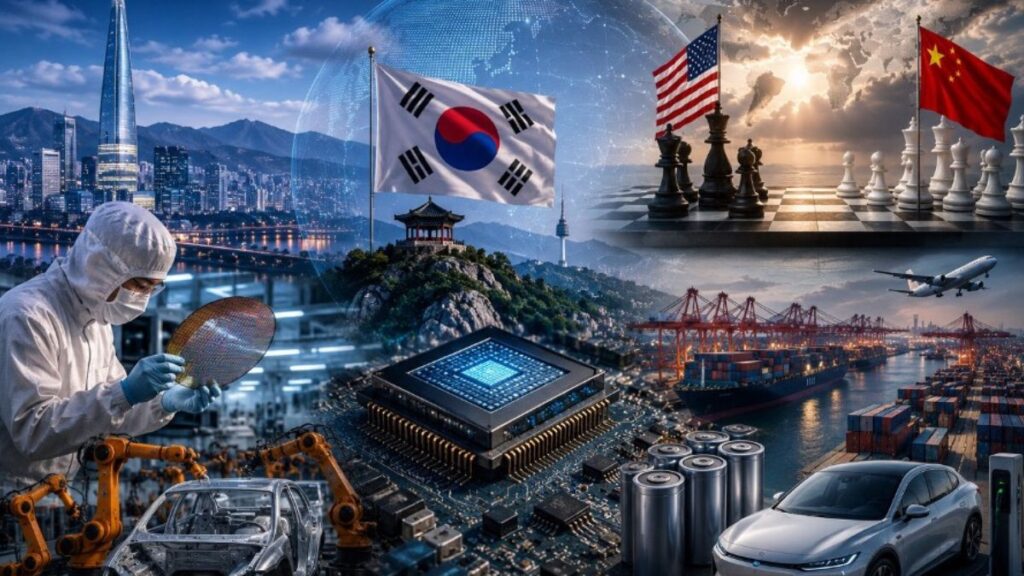
The article shows that this evolution is not the result of a break but of a gradual adaptation of the Korean model. The reforms undertaken after the Asian crisis led to a modernization of the governance of the chaebols and a strengthening of competition mechanisms, without calling into question the existence of large industrial groups considered to be essential vectors of international competitiveness. At the same time, the State is gradually reorienting its priorities towards research, innovation, digital technologies, semiconductors, batteries, artificial intelligence and communication infrastructure, while developing an active policy of securing supply chains.
This institutional change is accompanied by a redefinition of the very notion of industrial policy. This is no longer limited to supporting manufacturing capacities but now includes technological sovereignty, economic security, industrial resilience, data governance and the mastery of critical technologies. Like Japan, but in ways that are specific to its economy strongly structured around chaebols, South Korea illustrates the gradual transition from a Developmental State to a Strategic State or even an Economic Security State.
The article is part of a comparative research devoted to the evolution of major contemporary industrial policies. After the work devoted to the United States, China and Japan, this study highlights the convergences and specificities of Asian trajectories in the face of the considerable rise of the Chinese economy in globalization, the digital revolution and new forms of geoeconomic competition. Finally it shows that the South Korean experience offers several lessons for the European Union and its Member States, notably with regard to the link between industrial policy, competition policy, innovation, technological sovereignty and economic security in a context marked by the growing fragmentation of the world economy.
Introduction
Since the beginning of the twenty-first century, the main economic powers have profoundly renewed their conception of industrial policy. Long considered incompatible with open markets and globalization, state economic intervention is now experiencing a resurgence of interest as a result of the digital revolution, the rise of technological dependencies, supply chain disruptions and the intensification of geo-economic rivalries. Semiconductors, data, digital infrastructure, artificial intelligence, batteries, rare earths and research capabilities are now at the heart of national power strategies.[1]
This development is part of a more profound transformation of public economic action. Industrial, trade, competition, innovation and economic security policies, long analysed separately, are now tending to form an increasingly coherent whole, oriented towards strengthening the competitiveness, resilience and technological sovereignty of States.[2]
This article is part of a comparative research devoted to contemporary changes in major economic policies. After several studies on the transformations of the industrial policy of the United States and China since the latter’s entry into the World Trade Organization, as well as on recent developments in American, Chinese and European competition policies, an initial research devoted to Japan has shown how the former developmental state had gradually evolved into a real economic security state. This study extends this reflection by analyzing the trajectory of South Korea, another major East Asian economy whose institutional evolution presents both profound analogies and remarkable specificities.[3]
The Korean case is indeed of particular interest. If Japan constitutes the historical matrix of the Asian developing state, South Korea undoubtedly represents the most proactive form of it during the last decades of the twentieth century. However, the Asian financial crisis of 1997, China’s entry into the World Trade Organization in December 2001, then the digital revolution and the rise of technological rivalries between Washington and Beijing gradually led the Korean authorities to redefine the instruments and objectives of their industrial policy. The reforms undertaken concern not only chaebols and economic institutions, but also innovation policies, data governance, critical technologies and the security of value chains.[4]
The hypothesis defended in this study is that South Korea has not abandoned its developing state; it has profoundly transformed him. Initially focused on accelerated industrialisation, exports and support for large industrial groups, it is gradually evolving towards a model in which innovation, industrial policy, competition, digital technology and economic security become closely interdependent. Industrial policy thus ceased to be a sectoral policy and became one of the main instruments of the national power strategy.
Beyond the Korean case alone, this research is part of a more general reflection on the contemporary metamorphoses of the strategic state. A comparison of the trajectories of the United States, China, Japan, South Korea and, subsequently, Taiwan should enable us to better understand the new forms of public economic intervention and to draw lessons from them for the European Union, which in turn is faced with the challenges of technological sovereignty, industrial competitiveness and strategic autonomy.[5]
The article is organized in four parts. The first looks at the factors that led to the questioning of the Korean industrial model from the Asian crisis of 1997. The second analyzes the progressive reinvention of the strategic state around innovation, digital technology and critical technologies. The third studies the adaptation of Korean capitalism to digital globalization and new competitive challenges. The fourth shows the emergence of a genuine economic security policy focused on semiconductors, artificial intelligence and the resilience of value chains and identifies the main lessons for the European Union.
I – The questioning of the Korean development model: from the Asian crisis to the rise of China
For several decades, South Korea was one of the most spectacular economic success stories of the post-war period. Based on rapid industrialization, a strong export orientation, close cooperation between the state and the chaebols, and massive investment in education and technology, the Korean model has enabled the country to become one of the world’s leading industrial powers within a generation. This trajectory seemed to confirm the remarkable ability of the Korean developing state to support the upgrading of its economy and to strengthen its international competitiveness.[6]
However, the end of the 1990s opened a period of profound restructuring. The Asian financial crisis of 1997 revealed the accumulated fragilities within the financial system and the governance of the major industrial groups. A few years later, China’s accession to the World Trade Organization permanently upset the economic balance of East Asia by accelerating the displacement of industrial capacities, investments and value chains. In addition to these transformations, the ageing of the population, the slowdown in productivity gains and the emergence of the digital revolution are gradually calling into question the traditional drivers of Korean growth.[7]
All of these developments are gradually leading the South Korean authorities to rethink the very foundations of their development strategy. The transformations of the international environment (A), the internal limits of the model inherited from accelerated industrialization (B) and the gradual exhaustion of the traditional instruments of the developing state (C) thus explain the profound reorientation of industrial policy undertaken during the first two decades of the twenty-first century.
A. China’s Entry into the World Trade Organization and the Recomposition of the Asian Political Economy
China’s accession to the World Trade Organization on 11 December 2001 was one of the major turning points in contemporary economic history. While this event is profoundly transforming world trade, its effects are particularly intense in East Asia, where the most advanced industrial economies are gradually reshaping regional production chains, investment flows and technological specializations. For South Korea, the accelerated opening up of the Chinese economy represents both an exceptional opportunity for trade expansion and a long-term strategic challenge.[8]
During the 2000s, economic exchanges between the two countries grew spectacularly. Korean companies are investing heavily in China in order to benefit from lower production costs while maintaining control over design activities, high value-added components and the most advanced technologies. A new regional division of labour is gradually taking shape: China is becoming a vast assembly shop integrated into global value chains, while Korea is increasing its specialisation in intermediate goods, electronic components, industrial equipment and advanced technologies.[9]
However, this initial complementarity masks a more profound evolution. Thanks to particularly ambitious industrial policies, the rapid accumulation of technological capacity and the rise of vast public innovation programmes, China is gradually moving up the entire value chain. From the 2010s onwards, Chinese companies are no longer satisfied with assembling products designed abroad; They are developing their own research, engineering and innovation capacities in sectors previously dominated by Japanese, Korean, European or American companies. The fields of electronics, telecommunications, batteries, electric vehicles and digital technologies are particularly illustrative of this move upmarket.[10]
For South Korea, this evolution is gradually changing the very foundations of national competitiveness. Comparative advantages based on labour costs are rapidly disappearing, while positions in several technology industries are becoming more questionable. The Korean authorities are gradually becoming aware that the sustainability of the growth model can no longer be based solely on the export performance of large industrial groups; It now requires a constant renewal of innovation capacities, a continuous rise in the most sophisticated technological segments and a diversification of growth sources.[11]
This recomposition of the Asian political economy also has geopolitical consequences. The growing economic interdependence between Seoul and Beijing is gradually accompanied by new forms of industrial and technological dependence, while Sino-American tensions are putting Korea in an increasingly delicate position. A strategic ally of the United States while being deeply integrated into the Chinese economy, it must gradually learn to reconcile trade openness, economic security and technological autonomy. This issue would become one of the guiding principles of the transformation of Korean industrial policy over the next two decades.[12]
Thus, far from being a simple change in the international trade context, China’s entry into the World Trade Organization marks the beginning of a profound recomposition of the strategic environment in which South Korea operates. The developing state inherited from previous decades is no longer confronted with a simple process of globalization; It must now respond to the emergence of a competitor capable of competing simultaneously on costs, industrial capacity, technologies and innovation. This transformation is one of the main factors explaining the profound reorientation of Korean industrial policy at the beginning of the twenty-first century.
B. The limits of the model inherited from accelerated industrialization
The Asian financial crisis of 1997 was arguably the deepest economic shock suffered by South Korea since the beginning of its rapid industrialization in the 1960s. Beyond the violence of the recession, the collapse of the financial system and the unprecedented recourse to assistance from the International Monetary Fund, this crisis reveals the structural fragilities that had gradually accumulated within the Korean development model. The latter, remarkably effective during the decades of industrial catch-up, now appears less adapted to an advanced economy confronted with financial globalization, the technological revolution and profoundly renewed international competition.[13]
The first factor of vulnerability lies in the very characteristics of Korean capitalism. Since the 1960s, growth has been largely driven by chaebols, large family-owned conglomerates with privileged access to finance, active government support, and strong sector diversification. This model allowed rapid industrialization and a remarkable technological upgrade. However, it has fostered a high level of leverage, sometimes inefficient capital allocation and often opaque governance structures. The 1997 crisis brought these imbalances to the fore and led the authorities to undertake major reforms aimed at strengthening financial transparency, corporate accountability, and market discipline.[14]
However, these reforms do not call into question the central role of the chaebols in the national economy. Large groups remain the main drivers of exports, industrial research and technological investment. The relationship between the state and large companies nevertheless changed significantly: it was no longer a question of organizing extensive industrialization based on the accumulation of capital and the conquest of international markets, but of promoting growth more driven by innovation, productivity and advanced technologies.[15]
At the same time, several structural developments are beginning to weigh on the growth potential of the Korean economy. Population ageing is accelerating, gradually reducing the labour force and increasing tensions on the labour market. Productivity gains, which have long been exceptionally high, are slowing as the economy reaches the technological frontier. The gap between large exporting firms and small and medium-sized enterprises is widening, while the services sector remains relatively less productive than in other developed economies. These imbalances are gradually limiting the diffusion of innovation gains to the entire economic fabric.[16]
The transformation of the sources of international competitiveness further accentuates these difficulties. In the early stages of industrialization, growth was largely based on the mobilization of capital, the transfer of foreign technology, and the expansion of manufacturing capacity. From the 2000s onwards, value creation increasingly depends on intangible assets, research capacities, software, data, patents and innovation ecosystems. Simple industrial efficiency is no longer enough; it must be complemented by a permanent capacity for innovation and technological adaptation.[17]
This development is gradually leading the Korean authorities to reconsider the very nature of public intervention. The objective is no longer just to support certain industrial sectors or facilitate exports, but to create an environment conducive to innovation, technological entrepreneurship, the spread of digital technology and the development of skills in the entire economy. Research, higher education, competition, innovation financing and digital transformation policies are thus becoming increasingly important within the national development strategy.[18]
During the 2010s, these changes were further reinforced by the new uncertainties of the world economy. Sino-American trade tensions, the proliferation of industrial policies in the major powers and the first concerns about the security of supply chains are gradually leading the Korean authorities to integrate considerations of economic resilience and technological sovereignty into their strategic thinking. The developing state, originally conceived as an instrument of accelerated industrialization, is gradually being called upon to become a strategic state capable of organizing innovation, securing critical technologies and supporting the long-term transformations of the national economy.[19]
Thus, the difficulties encountered by South Korea after the Asian crisis do not reflect the failure of the development model inherited from previous decades. They testify more to its partial exhaustion in the face of a profoundly renewed economic environment. The institutions that had ensured the success of industrial catch-up must now be adapted to an economy based on knowledge, digital technologies and continuous innovation. It is precisely this transformation that is reflected in the new directions of Korean industrial policy at the beginning of the twenty-first century.
C. The relative exhaustion of the South Korean developer state model
The transformations observed since the end of the 1990s do not in any way call into question the historical successes of the Korean development model. In just a few decades, this has enabled the country to move from a largely agricultural economy to one of the world’s leading industrial and technological powers. This success remains one of the most successful illustrations of what the economic literature has described as a « developmental state« , characterized by strong administrative capacity, close cooperation between public authorities and companies and a coherent strategy of export-oriented industrialization.[20]
However, the conditions that had ensured the effectiveness of this model are gradually changing. The Korean economy is no longer a technological catch-up economy; It is now one of the advanced countries located at the world’s first frontier of innovation. Public policies can therefore no longer be limited to organizing the transfer of foreign technologies, supporting industrial investments or promoting exports. They must now create the conditions for permanent innovation, the production of knowledge and the mastery of the most advanced technologies.[21]
This evolution and the level of development achieved profoundly modify the very nature of public action. During the first decades of industrialization, the state directly directed investments, facilitated access to credit, protected certain strategic sectors and supported the creation of large industrial groups. As the economy matures, its role becomes more that of a public policy coordinator, an investor in knowledge infrastructures, an organizer of innovation ecosystems, and a guarantor of long-term competitiveness. The logic of administrative management is gradually giving way to a logic of strategic governance.[22]
This change is reinforced by the rise of the digital revolution. The traditional determinants of industrial power—physical capital, manufacturing capacity, or economies of scale—remain essential, but they are now complemented by new resources: data, software, artificial intelligence, digital networks, intellectual property, highly skilled human capital, and research infrastructure. The boundary between industrial policy, science policy, digital policy and innovation policy is gradually becoming more difficult to distinguish.[23]
At the same time, geopolitical uncertainties are also changing the purposes of public intervention. Trade tensions between the United States and China, the multiplication of technological restrictions, the Covid-19 pandemic and then growing concerns about the security of supply chains reveal that economic competitiveness can no longer be dissociated from industrial resilience and economic security. Critical technologies are gradually becoming issues of sovereignty as well as growth.[24]
For the Korean authorities, this accumulation of transformations led to a gradual broadening of industrial policy. This is no longer just about supporting certain manufacturing sectors; It aims to organize all the institutional conditions favorable to innovation, digital transformation, the development of critical technologies and the securing of national productive capacities. The traditional instruments of the developing state are thus gradually being supplemented by new policies relating to research, digital technology, artificial intelligence, data, cybersecurity and the resilience of value chains.[25]
It is therefore not a question of abandoning the Korean model, but of its profound transformation. The State retains a central role in the direction of economic development, but the modalities of this intervention are changing significantly. Sector planning is gradually giving way to the definition of technological priorities, the coordination of public and private actors and the construction of innovation ecosystems capable of responding to a global environment that has become much more unstable and competitive. The developing state is gradually becoming a strategic state, whose essential mission is less to direct the economy than to create the institutional conditions for its permanent adaptation.[26]
Thus, the transformations that have taken place since the Asian crisis and China’s entry into the World Trade Organization have not led to the disappearance of the Korean model of development. On the contrary, they open a new phase in its historical evolution. The instruments inherited from accelerated industrialisation are still present, but they are gradually being integrated into a much broader strategy combining innovation, digitalisation, critical technologies, competition and economic security. It is this profound reorientation that constitutes the guiding thread of the developments examined in the second part.
II – The reinvention of industrial policy: from the developing State to the strategic State of innovation
The economic changes that have taken place since the end of the 1990s have in no way led South Korea to give up its industrial heritage. On the contrary, they encourage him to profoundly renew its foundations. Public intervention remains at the heart of the national development strategy, but its objectives, instruments and modes of action are gradually evolving in order to meet the requirements of an economy now based on innovation, digital technologies, scientific research and intangible assets.
This reorientation is not the result of a return to the dirigiste policies of the period of accelerated industrialization, nor of a conversion to the mechanisms of an integral laissez-faire. It reflects the emergence of a new generation of industrial policies in which the state acts less as a direct administrator of the economy than as a strategic coordinator of investments, scientific capacities, technological infrastructures and innovation ecosystems. Industrial policy is thus tending to become one of the main instruments of technological competitiveness and economic sovereignty.
This transformation can be analysed through three complementary developments. The first concerns the redefinition of the role of the strategic state and its instruments of intervention (A). The second concerns the gradual refocusing of public policies on critical technologies that will structure the future competitiveness of the Korean economy (B). Finally, the third illustrates the growing integration of digital technology throughout the production system, through the national digital transformation strategy, the development of smart industry and the dissemination of innovation within society (C).
A. The redefinition of the role of the State as a strategist
The end of the Asian crisis opened a period of profound recomposition of the Korean state’s economic action. Although the reforms undertaken at the end of the 1990s strengthened market mechanisms, they did not lead to a lasting withdrawal of public power. On the contrary, the South Korean authorities consider that the rise of technological uncertainty, the intensification of international competition and the transformation of the world economy require a renewal of the State’s strategic capabilities rather than their weakening.[27]
This development can be seen first of all in the gradual transformation of the institutions responsible for industrial policy. The Ministry of Trade, Industry and Energy (MOTIE), the successor to the Ministry of Trade, Industry and Resources, is gradually expanding its powers to include policies related to industrial innovation, strategic technologies, energy transition and, more recently, economic security. Its action is closely linked to that of the Ministry of Science and ICT (MSIT), whose responsibilities cover public research, the digital economy, telecommunications, artificial intelligence and emerging technologies. This interministerial governance reflects a profound change: industrial policy can no longer be dissociated from scientific, digital and technological policies.[28]
At the same time, successive governments are putting in place a series of national strategies to prepare for the transition to an innovation economy. Policies to support exports and large industrial groups are gradually being complemented by programmes dedicated to basic research, the development of technological start-ups, the financing of venture capital, the strengthening of universities and the dissemination of digital technologies in small and medium-sized enterprises. The objective is no longer just to increase productive capacities, but to improve the quality of the innovation ecosystems on which long-term competitiveness is based.[29]
This evolution is accompanied by a transformation of the relationship between the state and the chaebols. These remain the main drivers of industrial investment, private research and exports. However, the public authorities are gradually seeking to promote a wider dissemination of innovation to the entire economic fabric. Industrial policies are therefore paying increasing attention to innovative start-ups, technological SMEs, partnerships between universities and companies and technology transfer mechanisms. National competitiveness is no longer thought of exclusively through the performance of large groups; It is now based on the ability of the entire production ecosystem to innovate continuously.[30]
This new conception of the strategic state is also reflected in the increased use of technological roadmaps, long-term national strategies and consultation mechanisms between administrations, companies, research institutes and universities. The public authorities are increasingly favouring a logic of strategic orientation rather than direct intervention in microeconomic decisions. The State sets priorities, mobilizes financing, coordinates actors and promotes investment in sectors considered decisive for future growth. This governance is fully in line with contemporary developments in industrial policies observed in the main developed economies.[31]
The health crisis of 2020 and the intensification of technological rivalries between the United States and China further accelerated this evolution. The Korean authorities are gradually becoming aware that industrial competitiveness can no longer be dissociated from issues of resilience, mastery of critical technologies and security of supply. The notions of technological sovereignty, secure value chains and economic security are thus beginning to permeate all industrial policies, heralding the orientations that will be developed during the 2020s.[32]
Thus, the transformation undertaken since the beginning of the twenty-first century does not mark the abandonment of the Korean developing state. On the contrary, it reflects its adaptation to an economy where industrial power now depends on the ability to organize interactions between research, innovation, digital technology, industry and economic security. This redefinition of public action directly prepares the way for the refocusing of industrial policies towards critical technologies, which constitutes the second dimension of this reinvention.
B. Refocusing on critical technologies: what strategic portfolio of sovereignty industries?
One of the most significant changes in Korean industrial policy in the first two decades of the twenty-first century has been the evolution of the very criteria for public intervention. During the period of accelerated industrialization, the public authorities essentially favoured a sectoral approach: steel, shipbuilding, automotive, petrochemicals and electronics were the subject of specific policies designed to promote their rise in power and their integration into world markets. As the economy reaches the technological frontier, this logic gradually gives way to a much more transversal approach based on the identification of critical technologies, whose applications simultaneously concern a large number of industrial sectors and condition the future competitiveness of the economy as a whole.[33]
This development reflects a profound transformation of the very notion of industrial policy. The Korean authorities are no longer just looking to support certain manufacturing sectors; They now intend to organise a real portfolio of national technological capabilities covering all the areas deemed essential to economic strength, national security and the resilience of value chains. Semiconductors, batteries, carbon-free mobility, robotics, biotechnology, new materials, digital technologies and advanced maritime industries are gradually being designed as complementary components of the same innovation system.[34]
This approach is particularly visible under the presidencies of Lee Myung-bak, Park Geun-hye, Moon Jae-inpuis Yoon Suk Yeol.[35] Despite sometimes different political orientations, successive governments have maintained remarkable continuity in identifying priority technology sectors. The titles of the strategies are evolving—Future Growth Engines, Manufacturing Innovation 3.0, Innovative Growth, Korean New Deal, K-Semiconductor Strategy, National Advanced Strategic Industries Strategy—but they have a common goal: to prepare for Korea’s transition to an economy based on disruptive technologies and intangible assets rather than on the only traditional manufacturing advantages.[36]
The rise of semiconductors is probably the best illustration of this new direction. Since the 2000s, the public authorities have considered this industry to be the fundamental infrastructure of the entire digital economy. Electronic components are no longer just another export sector: they are becoming an essential generic technology for artificial intelligence, telecommunications, automotive, industrial equipment, digital infrastructure and defence systems. This centrality explains the growing importance of maintaining national design, manufacturing and research capabilities across the chip value chain.[37]
The Korean strategy here is based on a particularly close articulation between the state and the large industrial groups. The massive investments made by Samsung Electronics and SK Hynix are accompanied by a set of public measures combining tax credits, support for research, development of industrial infrastructure, training of engineers and securing the supply of critical equipment. The launch of the K-Semiconductor Strategy in 2021 marks an important milestone in this policy by setting the goal of consolidating the world’s leading integrated semiconductor ecosystem, from research to mass production. The authorities intend to preserve a technological advantage that has become decisive in the context of the Sino-American rivalry and growing tensions around global supply chains.[38]
Beyond the large groups, this strategy also aims to strengthen the entire industrial ecosystem. Particular attention is paid to companies specializing in manufacturing equipment, high-purity materials, design software (Electronic Design Automation), public laboratories and technical universities. The objective is not only to maintain existing industrial capacity, but to reduce vulnerabilities that may affect the most sensitive segments of the value chain. This systemic approach is gradually bringing Korean industrial policy closer to the contemporary concerns of economic security observed in the major technological powers.[39]
Batteries are the second pillar of this technology leadership strategy. The global acceleration of the energy transition, the development of electric vehicles and the rise of electricity storage systems are rapidly transforming this industry into a strategic sector. Very early on, the Korean authorities identified this development as a major opportunity to strengthen the country’s technological specialization. The investments made by LG Energy Solution, Samsung SDI and SK On are accompanied by public policies designed to support research into new generations of batteries, develop national production capacities and secure access to critical raw materials essential for their manufacture.[40]
This policy goes far beyond the battery sector alone. It is part of a more global strategy for carbon-free mobility combining electric vehicles, fuel cells, hydrogen, charging infrastructure and embedded software. The public authorities are thus encouraging the development of a real industrial ecosystem in which car manufacturers, battery manufacturers, chemical companies, public laboratories and universities interact. Hyundai Motor Company‘s investments in electric vehicles and hydrogen technologies illustrate this desire to prepare for the long-term transformations of the global automotive industry rather than preserve the positions acquired in traditional powertrains.[41]
The geopolitical dimension of this strategy became increasingly clear during the 2020s. International tensions over lithium, cobalt, nickel and rare earths are gradually leading the Korean authorities to integrate the issue of raw materials into the industrial policy itself. Securing supplies, diversifying international partnerships, recycling strategic metals and developing a circular economy are gradually becoming integral components of industrial competitiveness. Thus, technology policy is no longer limited to supporting innovation; it now encompasses all the conditions necessary for the resilience of national value chains.[42]
All of these developments reflect a profound change in perspective. Korea is no longer just trying to maintain positions in a few sectors of excellence; It is gradually building a coherent portfolio of critical technologies whose interactions simultaneously enhance growth, innovation, strategic autonomy and economic security. This logic will be even more evident in the fields of advanced shipbuilding, robotics and biotechnology, which in turn illustrate the rise of an industrial policy based on technological ecosystems rather than on sectoral specialisations alone.
While semiconductors and batteries occupy a central place in Korea’s industrial strategy, they are only the most visible components of a much more ambitious policy. South Korean authorities are gradually seeking to build a coherent set of critical technologies covering all sectors that can determine industrial power in the coming decades. This diversification responds to a double logic. On the one hand, it reduces the risks associated with excessive specialization in a limited number of activities; on the other hand, it promotes technological interactions between industrial sectors whose innovations are becoming increasingly interdependent.[43]
Shipbuilding is a particular example of this development. Long considered one of the traditional sectors of Korean industrialization, it has undergone a profound technological transformation over the past fifteen years. Faced with the rise of Chinese shipyards in standardized segments, Korean manufacturers are gradually abandoning cost competition to favor very high value-added vessels: new-generation LNG carriers, ships intended to transport liquefied natural gas, ships powered by alternative fuels, new-generation offshore platforms, high-tech military vessels and, More recently, autonomous ships integrating advanced artificial intelligence, digital navigation and predictive maintenance systems.[44]
This move upmarket is the result of particularly close cooperation between public authorities, maritime research institutes and major industrial groups, including HD Hyundai, Hanwha Ocean and Samsung Heavy Industries. Public policies support not only industrial investments, but also the development of embedded software, sensors, intelligent navigation systems, environmental technologies and new maritime fuels. Shipbuilding is thus becoming a real laboratory for the convergence of heavy industry, digital technology, artificial intelligence and energy transition.[45]
This development also has a growing geopolitical dimension. Mastery of shipbuilding capabilities now determines not only Korea’s trade performance, but also its energy security, military capabilities, role in global supply chains, and influence in the Indo-Pacific region. Several American analyses also point out that Korean shipyards are now an essential element of the industrial resilience of the United States’ allies in the region. In Japan too, several government reports and academic works carefully observe the technological rise of Korean industrialists, considered to be one of the main factors in the recomposition of regional industrial balances in the maritime sector.[46]
Korean industrial policy is extending in parallel with other generic technologies whose applications concern the entire production system. Industrial robotics has long been one of the country’s areas of excellence. However, public policies are now seeking to go beyond the automation of production chains to develop collaborative robots, autonomous systems, medical, logistics or agricultural applications as well as the integration of artificial intelligence into industrial equipment. This orientation responds as much to the needs of competitiveness as to the demographic constraints resulting from the rapid ageing of the working population. Biotechnology and life sciences are also becoming increasingly important in national strategies. Investments in pharmaceuticals, biomedicines, personalized medicine, genomic technologies and bioprocesses demonstrate the authorities’ commitment to diversifying the drivers of future growth. The experience gained during the Covid-19 pandemic further reinforces this focus by highlighting the strategic importance of national capacities for biomedical research, pharmaceutical production and response to health crises. Economic security thus tends to gradually integrate health security among its new dimensions.[47]
New materials, quantum technologies, next-generation networks, high-performance computing, generative artificial intelligence and digital infrastructures are gradually completing this technology portfolio. The Korean authorities favour an ecosystem logic rather than a juxtaposition of sectoral policies. The various public programmes are designed to promote technology transfer, the circulation of skills, cooperation between universities, research centres and enterprises, and the dissemination of innovation to small and medium-sized enterprises. The objective is to multiply the complementarities between technologies rather than supporting a few industrial champions in isolation.[48]
This approach significantly distinguishes the Korean strategy from several foreign models. Unlike the American model, which is largely structured around the initiative of large private companies and the financing of dual technologies by defence, Korea retains a strong capacity for public coordination. Also unlike Chinese state capitalism, the authorities do not intend to substitute the state for the market but to organize the conditions for a more efficient functioning of innovation ecosystems. Industrial policy thus appears to be an instrument of strategic orientation rather than a permanent mechanism for the direct administration of the economy.[49]
At the end of this evolution, Korean industrial policy can no longer be analysed as a simple set of sectoral supports. It is now tending to build a real strategic portfolio of critical technologies, in which semiconductors, batteries, advanced naval industries, robotics, biotechnology, artificial intelligence, digital infrastructure and new materials reinforce each other. This systemic vision of competitiveness directly prepares the emergence of an economic security doctrine that is expected to develop fully during the 2020s.
C. The digital transformation of the economy: towards a national innovation ecosystem
The reorientation of Korean industrial policy cannot be fully understood without taking into account the growing importance of digital technologies in national development strategies. During the 2010s, the digital revolution profoundly transformed the conditions for industrial competitiveness. Data, software, communications infrastructure, artificial intelligence, next-generation networks and computing capabilities are gradually becoming as important factors of production as physical capital or traditional industrial infrastructure.[50] For the Korean authorities, the challenge is therefore no longer just to develop a few cutting-edge technological sectors, but to disseminate digital technologies throughout the production system in order to sustainably increase productivity, innovation capacity and resilience.
This development is leading to a profound transformation of the very conception of industrial policy. Public programmes are no longer exclusively geared towards supporting specific sectors; They now aim to promote the integration of digital technologies into all economic activities. The aim is to create a genuine national innovation ecosystem in which digital infrastructure, scientific research, academia, business, investors and public administrations interact on an ongoing basis to accelerate the diffusion of innovations.[51]
This orientation is particularly clear in the Manufacturing Innovation 3.0 strategy, which was launched in the mid-2010s. Inspired by the transformations observed in the main industrial economies, it aims to modernize the Korean productive apparatus through the development of smart factories, the Industrial Internet of Things, advanced robotics, automation of manufacturing processes and real-time data analysis. The public authorities thus encourage the dissemination of digital technologies not only among large industrial groups but also among small and medium-sized enterprises, which are considered to be an essential link in national competitiveness.[52]
One of the most remarkable aspects of this policy lies precisely in this desire to spread innovation beyond the chaebols. While SMEs remain the main private investors in research and development, the authorities are increasingly considering that Korea’s future competitiveness also depends on the ability of SMEs to integrate new digital technologies into their production processes, supplier relationships, and business models. Several national programs are devoted to the digital modernization of medium-sized companies, the development of collaborative platforms, employee training and support for the organizational transformations necessary for the adoption of Industry 4.0 technologies.[53]
This logic was reinforced in the early 2020s by the launch of the Korean New Deal, which was one of the major economic responses to the crisis caused by the Covid-19 pandemic. Without calling into question previous orientations, this strategy accelerates public investment in digital infrastructure, data centres, communication networks, artificial intelligence, digital services and the ecological transition. The (Korean) Digital New Deal and the (Korean) Green New Deal are designed as two complementary components of the same modernization strategy aimed at preparing the Korean economy for the technological and environmental transformations of the coming decades.[54]
Artificial intelligence is gradually occupying a central place in this new generation of industrial policies. The national strategies published by the government emphasize that AI is a general technology that has the potential to simultaneously transform manufacturing, services, health, transport, public administration and scientific research. The aim is not only to support the development of companies specialising in artificial intelligence, but to ensure the widest possible dissemination of these technologies throughout the economy. Industrial competitiveness now depends on each sector’s ability to integrate advances in machine learning, big data analytics, and autonomous systems.[55]
This strategy is also based on a massive investment in national research and training capacities. Universities, public research institutes, technology hubs, and centers of excellence play a critical role in building the Korean innovation ecosystem. Institutions such as KAIST, POSTECH and the main national research institutes have close relationships with industrial companies and technology start-ups. The public authorities thus promote the circulation of skills, the transfer of technology, the financing of young innovative companies and the development of venture capital capable of supporting the growth of new players in the digital economy.[56]
The emphasis on data is another characteristic feature of this development. The Korean authorities are gradually considering that the capacity to collect, process, share and exploit data is now an essential factor for competitiveness. Public policies thus encourage the development of data infrastructures, digital platforms, interoperability standards and mechanisms to facilitate the use of data in research, industry and services, while seeking a balance between innovation, privacy and information security.[57]
Through these different policies, Korea is developing a particularly integrated conception of digital transformation. Contrary to a vision that would oppose industry and the digital economy, the authorities are on the contrary seeking to organize their convergence. Digital technologies are not a stand-alone sector; they are gradually becoming the common infrastructure on which all economic activities are based. This approach promotes interactions between semiconductors, robotics, artificial intelligence, batteries, automotive, biotechnology and maritime industries, helping to strengthen the coherence of the national technology portfolio built over the previous two decades.[58]
Thus, Korean industrial policy no longer aims only to bring out national champions in a few strategic sectors. It now tends to spread innovation capacities throughout the productive fabric, so that each company can benefit from the advances made in critical technologies. The competitive advantage no longer lies exclusively in the excellence of a few large industrial groups; It is increasingly based on the ability of the economy as a whole to absorb, disseminate and continually renew innovation. This systemic diffusion of innovation directly prepares the developments analyzed in the next section, where the challenges of competition, data and digital sovereignty will gradually lead Korea to adapt the foundations of its technological capitalism.
III – Competition, the digital economy and technological sovereignty: the adaptation of Korean capitalism
The transformation of industrial policy cannot be dissociated from the evolution of the competitive environment in which Korean companies are now developing. The rise of the digital economy, the increasing concentration of technology markets, the dominance of major global platforms and the intensification of Sino-American rivalry are profoundly changing the conditions for competition. The Korean authorities are thus led to gradually adapt their regulatory instruments in order to simultaneously preserve innovation, the international opening of the economy and national technological capacities.
This development is of particular importance for South Korea. Unlike the United States or China, it does not have a complete ecosystem of global digital platforms capable of structuring the international economy. On the contrary, its growth model is based on a strong integration into global value chains, exceptional trade openness and a significant dependence on digital infrastructures developed by foreign companies. As a result, competition policy can no longer be thought of independently of industrial, digital and trade policies. It is gradually becoming one of the instruments of technological competitiveness and economic security.
This recomposition appears through three complementary developments. The first concerns the gradual adaptation of competition policy to the new realities of globalisation and the growing power of the large technology groups (A). The second concerns the challenges raised by the dominance of American digital platforms, cloud computing and the data economy, which are leading the Korean authorities to rethink the conditions for a balanced development of digital markets (B). Finally, the third shows how Korea is gradually seeking to build an original position between the American and Chinese models, by reconciling international openness, data governance, digital sovereignty and strategic autonomy (C).
A. Korean competition policy put to the test by technological globalization
Competition policy has long occupied a singular place in the evolution of Korean capitalism. During the period of accelerated industrialization, public intervention essentially focused on the objectives of growth, industrialization and international competitiveness. The development of chaebols was then one of the main instruments of the national economic strategy, even if it meant relegating to the background certain concerns relating to the competitive functioning of the markets. However, the gradual opening up of the economy, the reforms undertaken in the aftermath of the 1997 Asian crisis, and the deepening of globalization are leading the authorities to seek a new balance between economic efficiency, innovation, and the preservation of competition.[59]
This development is reflected in particular in the gradual strengthening of the competences of the Korea Fair Trade Commission (KFTC).Created in the early 1980s, the ECB’s role gradually expanded in order to ensure not only the control of anti-competitive practices, but also the monitoring of mergers, the regulation of abuses of dominant positions, the fight against cartels and the supervision of economic relations within large groups. Successive reforms reflect a desire to gradually bring Korean competition law closer to the standards observed in the main developed economies, while taking into account the specificities of the national industrial structure.[60]
However, this convergence remains largely pragmatic. The Korean authorities have never considered competition policy as an end in itself. Contrary to a purely ordoliberal or strictly consumerist conception, competition is mainly conceived as an instrument intended to promote innovation, economic efficiency and the renewal of industrial capacities. This approach leads the KFTC to seek a permanent balance between the need to preserve effective rivalry in the markets and the need to maintain the international competitiveness of Korean companies in the face of competitors that sometimes benefit from considerable public support.[61]
This search for balance appears with particular clarity in the treatment of chaebols. Since the late 1990s, several reforms have aimed to improve their governance, strengthen financial transparency, limit certain cross-shareholdings and prevent abuses that may result from their economic power. However, the public authorities do not seek to call into question their central role in the national economy. The major groups remain the main investors in research and development, the country’s leading exporters and the key players in the national industrial strategy. Competition policy is therefore less about reducing their size than about improving their functioning and encouraging a wider dissemination of the effects of innovation to small and medium-sized enterprises.[62]
This orientation is reinforced with the rise of the digital economy. Digital markets have new economic characteristics — network effects, economies of scale, data accumulation, low marginal costs and a strong tendency towards concentration — which are gradually leading the Korean authorities to adapt their competitive analysis tools. The KFTC is thus developing a growing expertise in the examination of digital platforms, two-sided markets, digital ecosystems and mergers involving technology companies, joining the reflections conducted in parallel in the United States, the European Union and Japan.[63]
Foreign investment is also a growing challenge for competition policy. The opening up of the Korean economy remains a fundamental element of its development strategy. However, the acquisition of companies with sensitive technologies, strategic research capabilities or key digital assets is now attracting increased public attention. Without calling into question the principle of openness to international investment, the authorities are gradually developing mechanisms to better take into account long-term industrial and technological interests. The boundaries between competition law, industrial policy and economic security are thus gradually becoming more porous.[64]
This development reflects a profound transformation in the general philosophy of Korean competition policy. Long conceived as an instrument to accompany economic modernisation, it is now tending to become one of the elements of a more global strategy aimed at preserving national capacities for innovation in a profoundly transformed technological environment. The challenges posed by the dominance of the major international digital platforms particularly illustrate this new articulation between competition, innovation and technological sovereignty, which is now one of the main challenges of Korean economic policy. Because South Korea appears most clearly as an economy inserted into architectures of power that the country does not control.
B. Digital Markets and U.S. Dominance: Platforms, Data, and Technology Dependencies
The evolution of Korean competition policy cannot be fully understood without taking into account the deeply asymmetric structure of global digital markets. As the economy becomes more digitalized, the critical infrastructure for the production, distribution, and circulation of information is concentrated in the hands of a few large technology companies, mainly American. E-commerce platforms, operating systems, search engines, social networks and especially cloud computing infrastructures are gradually becoming obligatory points of passage for global economic activity.[65]
For South Korea, this configuration poses a specific problem. The national economy is based on very high-level industrial capacities, but it does not have players comparable to the large global platforms capable of structuring international digital markets. As a result, an increasing share of economic activity depends on digital infrastructure controlled by foreign firms, which introduces a new form of systemic dependence, different from the traditional industrial dependencies observed in manufacturing value chains.[66]
This is particularly noticeable in the field of cloud computing. Data storage and processing infrastructures are dominated by a few American players, including Amazon Web Services, Microsoft Azure and Google Cloud. These platforms don’t just provide technical services; They also structure digital ecosystems, condition companies’ technological choices, influence software architectures and play a decisive role in the global circulation of data. For Korean companies, their use has become essential, including for the most advanced industrial players.[67]
This dependence is reinforced by the centrality of U.S. software ecosystems in the global digital economy. Operating systems, development environments, application delivery platforms, and technical standards are largely defined by U.S. companies. Even the most powerful Korean industrial players, including in semiconductors or electronics, are part of digital value chains largely structured by these platforms. The boundary between manufacturing and software industry is thus becoming increasingly porous.[68]
Digital platforms are also becoming increasingly important in domestic economic relations. E-commerce, mobility, payment and online advertising services are dominated by a few global players, raising new issues for competition policy. Network effects, data concentration, and economies of scale make it particularly difficult for large-scale local competitors to emerge. The Korean authorities are thus confronted with market structures in which traditional competitive dynamics are profoundly modified.[69]
This situation has led the Korea Fair Trade Commission to gradually develop new analysis and intervention tools. Without calling into question the opening of the digital economy, it seeks to better regulate practices likely to strengthen dominant positions, in particular in terms of access to data, interoperability of services, algorithmic transparency and contractual conditions imposed on professional users. This evolution is part of a broader trend observed in the main developed economies, where the regulation of platforms is becoming a central issue in competition policy.[70]
However, the room for manoeuvre of the national authorities remains structurally limited. The transnational nature of digital platforms, their ability to operate simultaneously in several markets and their control of data infrastructures reduce the effectiveness of purely national regulations. Korea thus finds itself in a paradoxical situation: it has a sophisticated industrial policy in critical technologies, but remains dependent on foreign players for an essential part of its basic digital infrastructure.[71]
This tension is particularly noticeable in the field of cloud and artificial intelligence services, where Korean companies must arbitrate between technological performance, cost and strategic dependence. The increasing integration of generative artificial intelligence into industrial processes and services further accentuates this dependency, as fundamental models, computing infrastructures and software ecosystems remain largely concentrated in a small number of US companies. The question is therefore no longer just one of competition, but that of technological sovereignty in a globalised environment.[72]
Thus, the dominance of American digital platforms is not only a market phenomenon. It profoundly structures the conditions for the exercise of Korean economic policy. It forces the authorities to think simultaneously about international openness, industrial competitiveness and technological dependence, in a context where the traditional instruments of competition policy appear insufficient to regulate globalised digital ecosystems. It is precisely this tension that is paving the way for the emergence of new strategies aimed at defining an autonomous position between the American and Chinese models, because the South Korean leaders and their highly educated populations cannot be satisfied with the fact that their country must be content to be nothing more than a digital economy subordinated to power architectures that the country does not control. This perception should find a strong resonance in some European nations.
C. South Korea in search of a third way between Washington and Beijing: data, governance and digital sovereignty
All the tensions highlighted in the two previous sub-sections are gradually leading South Korea to seek a position of equilibrium between the two structuring poles of the global digital economy. On the one hand, the U.S. dominates critical technology infrastructure, global digital platforms, operating systems, and cloud services. On the other hand, China is developing an alternative model based on strong integration between the state, state-owned enterprises and large national platforms. Between these two systems, Korea is trying to preserve its own path, characterized by economic openness, international integration and the search for relative technological autonomy.[73]
This search for balance is first expressed in the field of data governance. Korea actively participates in international discussions on data flows, including through the concept of Data Free Flow with Trust (DFFT), initially promoted by Japan.[74] The aim is to guarantee the free flow of data on an international scale while establishing trust standards that reconcile innovation, personal data protection and national security. For Korea, this approach is a key trade-off between the openness that is essential to its business model and the growing need to protect its strategic digital assets.[75]
At the same time, the Korean authorities are developing national instruments to regulate the use of data and to strengthen the control capacity over certain critical infrastructures. Without adopting a logic of closure comparable to that observed in some more centralised systems, they seek to establish rules of transparency, localisation and interoperability to avoid excessive dependence on large foreign platforms. This progressive regulation reflects a desire to balance the imperatives of competitiveness and the requirements of digital sovereignty.[76]
This tension is also reflected in the digital industrial policy. Korea simultaneously promotes integration into U.S. technology value chains and the development of domestic capabilities in strategic areas such as artificial intelligence, sovereign cloud, advanced semiconductors, or cybersecurity technologies. This hybrid strategy is based on a dual logic: to take advantage of global technology ecosystems while avoiding structural dependence on their dominant players.[77]
One of the distinctive features of this approach is the desire to maintain a high level of economic openness while strengthening national negotiating capacities. In contrast to a model based on market closure or segmentation, Korea favours a strategy of institutional adaptation. It seeks to influence international standards, participate in digital governance bodies and be part of emerging regulatory coalitions, including with the European Union and some OECD partners.[78]
This strategy of equilibrium is also perceptible in economic relations with China and the United States. With the United States, Korea has a relationship of strong technological and security integration, particularly in the fields of semiconductors, defense and digital infrastructure. With China, it maintains key industrial links, particularly in manufacturing value chains and regional markets. This double dependence places Korea in a structurally delicate situation, where each evolution of Sino-American tensions has direct effects on its industrial and technological choices.[79]
In this context, competition policy and digital regulation are becoming indirect instruments of economic foreign policy. The choices made by the KFTC or by the digital regulatory authorities can no longer be analysed solely in terms of internal competition; They should also be understood as part of a broader strategy to preserve the country’s room for manoeuvre in a fragmented technological environment.[80]
This quest for relative autonomy does not mean a desire to break with the world’s major technological hubs. Rather, it reflects a strategy of intermediate positioning, aiming to take advantage of both systems without being entirely subordinated to them. In this sense, South Korea is moving closer to a form of technological economic diplomacy based on flexibility, adaptation and diversification of dependencies. This posture is one of the most sophisticated responses to the challenges posed by the fragmentation of the global digital economy.[81]
Thus, Korea is not seeking to replicate the U.S. model of platform domination, nor to adopt China’s model of state-sponsored data centralization. Rather, it is trying to build a digital third way, based on controlled openness, participation in international standards and the development of national technological capabilities in the most critical sectors. This approach directly prepares the emergence of a more explicit economic security policy, which is analysed in the next section.
IV. The emergence of economic security: towards an integral strategic state, what lessons?
The gradual transformation of Korea’s industrial policy and competitive framework is leading to an even more profound reorganization of the instruments of public economic action. The intensification of technological rivalries between great powers, the rise of trade and technological restrictions, as well as the increasing fragmentation of the world economy are leading to a redefinition of the very objectives of economic policy. It is no longer just a question of supporting the competitiveness of national companies or ensuring the proper functioning of markets, but of preserving essential production, innovation and resilience capacities in an international environment that has become structurally unstable.[82]
In this context, the notion of economic security is gradually becoming a unifying framework for industrial, technological and trade policies. South Korea, due to its exceptional degree of openness and its strong dependence on global value chains, is particularly exposed to these developments. It is thus led to integrate concerns about economic sovereignty into areas that were previously regulated exclusively according to market logic. This development does not constitute a break with previous orientations, but their logical extension in a context of increased strategic competition.[83]
This fourth part will analyze this recomposition through three complementary dimensions. The first concerns the rise of economic security instruments in Korean industrial and trade policy (A). The second examines the gradual integration of technological sovereignty considerations into investment, acquisition control and sensitive technology protection policies (B). The third highlights the consolidation of an integrated strategic state, in which industrial policy, competition and economic security tend to form a coherent set of public action (C). Finally, a fourth sub-section allows us to consider what consequences can be drawn from the South Korean experience for the European Union and its Member States.
A. The Rise of Economic Security in Industrial and Trade Policy
The rise in geoeconomic tensions during the 2010s and 2020s led South Korea to gradually reassess the foundations of its economic opening strategy. Historically, Korean growth has been based on an extremely deep integration into international trade, a strong specialization in export industries and advanced integration into global value chains. However, this structural dependence is gradually becoming a factor of vulnerability in a context marked by the rise of technological restrictions, Sino-American trade tensions and the fragmentation of international economic norms.[84]
In this context, the Korean authorities are gradually introducing economic security considerations into the formulation of industrial policies. The objective is no longer only to improve the competitiveness of national companies in global markets, but also to ensure the continuity of critical supplies, the resilience of value chains and the protection of strategic technological capabilities. This is reflected in a diversification of public policy instruments, including supply chain monitoring systems, warning mechanisms on potential shortages and strategic stockpiling policies in certain sensitive industrial sectors.[85]
This recomposition is particularly visible in the semiconductor, battery and critical materials sectors, where Korea occupies central positions in global value chains. Public authorities are developing strategies to reduce the risks associated with excessive concentration of sources of supply or dependence on certain foreign markets. Without calling into question the principle of openness, they seek to introduce a logic of risk management into industrial policy, thus marking an important evolution compared to previous approaches focused mainly on economic efficiency and growth.[86]
At the same time, trade policy is gradually integrating economic security considerations. South Korea’s trade agreements increasingly take into account issues related to the resilience of value chains, technological cooperation and the protection of strategic sectors. This evolution reflects a more general transformation of international trade, in which economic flows are no longer regulated solely by considerations of comparative advantage, but also by logics of power and security.[87]
Box 1
Main Institutions of South Korean Industrial Policy
| Acronym | Institution |
| EPB | Economic Planning Board (1961-1994), central body of economic planning. |
| MOTIE | Ministry of Trade, Industry and Energy, Ministry of Industrial Policy and Economic Security. |
| KDB | Korea Development Bank, a public development bank. |
| KOTRA | Korea Trade-Investment Promotion Agency, trade and investment promotion agency. |
| KDI | Korea Development Institute, a public institute for economic analysis. |
| KIET | Korea Institute for Industrial Economics and Trade, a research institute on industrial economics. |
| KIAT | Korea Institute for Advancement of Technology, innovation support agency. |
| KAIST | Korea Advanced Institute of Science and Technology, public research university. |
| ETRI | Electronics and Telecommunications Research Institute, a public research institute in electronics and telecommunications. |
Thus, economic security is gradually becoming a structuring framework for Korean industrial and trade policy. It does not replace the traditional objectives of growth and innovation, but complements them by introducing a new dimension: that of managing structural vulnerabilities in an unstable international environment. This development directly prepares the analysis of the instruments of technological sovereignty and the control of foreign investments, which is the subject of the next subsection.
B. Foreign Investment Control and Protection of Sensitive Technologies
The deepening of economic security is leading South Korea to gradually strengthen its foreign investment control mechanisms, particularly in sectors considered strategic for technological competitiveness and industrial sovereignty. This is part of a broader international movement to reassess the openness of economies in the face of risks related to sensitive technology transfers, critical infrastructure equity investments and the acquisition of technology-intensive industrial assets.[88]
Historically, South Korea has built its growth model on a very wide opening to foreign capital, considered an essential vector for industrial modernization, integration into global value chains and technological upgrading. However, from the 2010s onwards, and even more clearly in the 2020s, this logic of unconditional openness was gradually replaced by a more selective approach, integrating criteria of economic security and the protection of critical technologies.[89]
This is reflected in the strengthening of notification and authorization procedures for foreign investments in certain sensitive sectors, including semiconductors, batteries, defense technologies, digital infrastructure, telecommunications, and advanced materials. The Korean authorities are thus seeking to prevent the risks of unintentional transfer of strategic technologies to actors likely to compromise the country’s industrial and security interests.[90]
In this context, the role of the Ministry of Trade, Industry and Energy (MOTIE) as well as that of the Korea Trade-Investment Promotion Agency (KOTRA) becomes central in the evaluation of investment operations. These institutions work closely with other public bodies, including the KFTC, the Korean competition authority mentioned above, to identify transactions that may pose economic security concerns, in particular when they involve companies with critical technologies or dominant positions in key segments of global value chains.[91]
In addition, South Korea is part of a dynamic of gradual convergence with the practices observed in other major industrial economies, notably the United States and the European Union, which have developed mechanisms for screening foreign investments in sensitive sectors. This convergence does not mean a complete standardization of legal regimes, but it reflects a shared awareness of the need to better regulate capital flows in an environment marked by technological rivalry and geo-economic fragmentation.[92]
One of the major challenges of this evolution lies in the difficulty of reconciling economic openness and strategic protection. Korea remains heavily dependent on foreign investment for certain advanced technological capabilities, while seeking to preserve domestic control over the most sensitive assets. This tension is leading to the emergence of hybrid arrangements, combining ex-ante screening, ex-post control and enhanced monitoring mechanisms for investments in critical sectors.[93]
This logic of security also extends to the protection of the technologies themselves. Governments are strengthening mechanisms to prevent IP leakage, to provide a framework for international technology partnerships, and to monitor the transfer of know-how in strategic areas. Industrial policy thus becomes inseparable from a policy of technological protection, which aims to preserve national innovation capacities in an increasingly competitive global environment.[94]
In this context, the boundary between competition policy, industrial policy and national security is becoming increasingly porous. Decisions on foreign investment are no longer solely based on economic considerations, but are part of a broader logic of preserving the country’s productive and technological capacities. This development marks a profound transformation of Korean economic governance, which tends to increasingly integrate security imperatives into all its regulatory instruments.[95]
C. Towards the integrated strategic state: convergence of competition, industrial policy and economic security
The evolution of Korean economic policy is gradually leading to an overall recomposition of public instruments, in which the traditional boundaries between competition policy, industrial policy and economic security tend to blur. This movement is not the result of a single institutional reform, but of a gradual convergence of the logics of public action under the effect of the transformation of the structures of globalization and the intensification of geo-economic rivalries. South Korea thus appears to be one of the most advanced laboratories in the transition to an integrated strategic state, capable of simultaneously coordinating the objectives of competitiveness, innovation and security.[96]Table 1 below highlights the different phases of changes and recompositions over the last four decades.
In this context, competition policy can no longer be analysed as an isolated instrument aimed solely at ensuring the proper functioning of the markets. It is gradually becoming a tool for arbitrating between economic efficiency and strategic resilience. Regulators, first and foremost the KFTC, are required to integrate considerations of value chain structure, technological concentration and critical dependencies into their analysis of corporate behaviour and mergers. Competition is thus reinterpreted as an element of a broader system of economic governance.[97]
Table 1
The changes in the South Korean strategic state (1980-2020)
| Decade | Economic context | Mutation of the State as a strategist | Industrial priorities | Preferred Instruments |
| 1980s | Gradual liberalization after the Park Chung-hee period | Transition from a planning state to a modernizing state | Automotive, electronics, shipbuilding, petrochemicals | Directed credit, protection of the internal market, support for chaebols |
| 1990s | Globalisation, accession to the OECD, the Asian crisis of 1997 | Reforming State and International Openness | Semiconductors, telecommunications, IT | Chaebol reform, opening up to FDI, strengthened competition policy |
| 2000s | Economic recovery and the knowledge-based economy | Innovative State | ICT, broadband, biotechnology, nanotechnology | Massive investments in R&D, universities, public institutes |
| 2010s | Global technological competition | State, entrepreneur and coordinator | Industry 4.0, robotics, AI, batteries, electric vehicles | Creative Economy, Manufacturing Innovation 3.0, support for innovative SMEs |
| 2020s | Pandemic, Sino-American rivalry, economic security | Strategic State of Economic Sovereignty | Semiconductors, batteries, AI, defense, hydrogen, biotechnology | K-Chips Act, investment controls, support for critical value chains, reshoring |
At the same time, industrial policy is moving towards an increasingly explicitly mission-oriented logic, in which the state no longer limits itself to correcting market failures but actively participates in the structuring of technological trajectories. This orientation is reflected in the development of public programs in advanced semiconductors, next-generation batteries, artificial intelligence and critical technologies, in which the objectives of technological sovereignty, international competitiveness and economic security are closely intertwined.[98]
Economic security constitutes, from this perspective, the integrating framework for these different policies. It makes it possible to link previously dispersed instruments — foreign investment control, industrial policy, competition regulation, trade policy — within a coherent logic of management of strategic dependencies. This evolution reflects a profound transformation in the economic rationality of public action, which is no longer based solely on the efficient allocation of resources, but also on the control of systemic vulnerabilities in a fragmented and unstable international environment.[99]
This institutional recomposition is also accompanied by a transformation of the relationship between the State and private actors. The major Korean industrial conglomerates, the chaebols, but also the new technology companies, are becoming strategic partners of public policy, integrated into mechanisms for the co-construction of industrial and technological capacities. The state no longer acts only as a regulator or arbiter, but as a long-term coordinator of innovation and economic security trajectories.[100]
In this context, the distinction between domestic and foreign policy is becoming increasingly difficult to maintain. Choices for the regulation of digital markets, decisions on foreign investment or industrial policy orientations have direct effects on Korea’s international position in global value chains. National economic governance is thus part of a profoundly internationalized space, in which economic decisions are simultaneously instruments of strategic positioning.[101]
Thus, South Korea is no longer content to adapt its economic policies to globalization. It actively participates in the redefinition of the rules of the game of this globalization, by combining openness, public intervention and strategic management of dependencies. The emergence of this integrated strategic state is the logical outcome of the transformations analysed throughout this article, and opens up directly to the question of international comparison, notably with Japan, the United States and China, as well as with the specific challenges facing the European Union.
D. The differentiated strategic state: international comparison and implications for the European Union
The analysis of the Korean trajectory highlights an evolution that cannot be understood in isolation. It is part of a broader movement of recomposition of advanced capitalisms, characterized by the gradual convergence between industrial policy, competition policy and the imperatives of economic security. However, this convergence does not produce a single model, but a plurality of institutional configurations that can be grouped under the concept of the differentiated strategic state.[102]
From this perspective, Japan appears as a model of a strategic state based on administrative continuity, institutional coordination and strong organizational inertia. Industrial policy remains structured by long-standing administrative traditions, particularly within the METI, and by a logic of long-term management of strategic industrial sectors. This configuration favours stability and coherence, but can make it more difficult to adapt quickly to contemporary technological and geo-economic breakthroughs.[103]
The United States, on the other hand, embodies a more offensive and explicitly geopolitical form of strategic state. The articulation between industrial policy, trade policy and national security is now assumed as a central instrument of systemic rivalry, particularly in the field of semiconductors, advanced technologies and digital infrastructures. Public intervention is deployed in a more direct, targeted and reactive way, in a logic of global technological competition.[104]
China, on the other hand, represents a configuration where integration between the state, strategic planning and control of technological infrastructure is the most advanced. The state retains the capacity to direct investment, value chains and technological priorities, in an institutional framework where the separation between the public and private spheres remains structurally weaker than in Western economies.[105]
In this landscape, South Korea occupies a particularly significant intermediate position. It combines a very high level of economic openness, a strong integration into global value chains and a gradual rise in economic security instruments. It thus illustrates the figure of a strategic state « under constraint », capable of developing sophisticated industrial policy and regulatory instruments while remaining structurally dependent on global technological and financial architectures.[106]
This configuration makes Korea particularly useful for understanding the contemporary tensions of world capitalism. It highlights a central dynamic: the rise of economic security as an organizing principle of public action, without breaking with market logics, but as an internal reconfiguration of the latter. The strategic state does not abolish competition; it reconfigures it according to considerations of resilience, dependence and technological power.[107]
It is in this context that the European Union and its Member States appear as a specific case, both close and distinct. They have an advanced integrated market and considerable normative power, but still face industrial fragmentation and persistent dependence in critical technology sectors. The recent debates on competitiveness, industrial policy and economic sovereignty bear witness to a growing awareness of these structural limits, which are gradually bringing the European Union closer to the problems encountered by the other major world economic centres[108].
Thus, all the trajectories analyzed — Japanese, American, Chinese and Korean — lead to the identification not of a single model of strategic state, but of a plurality of institutional forms adapted to different positions in globalization. South Korea occupies a central analytical position in this context, in that it reveals particularly clearly the tensions specific to open economies confronted with the fragmentation of the world economic order.
Conclusion
The evolution of South Korea’s industrial policy invites a reassessment of the classical concept of the developmental state, which has long served as the dominant analytical framework for explaining the country’s remarkable industrial transformation. While this paradigm successfully accounts for South Korea’s rapid economic catch-up during the second half of the twentieth century, it no longer fully captures the profound changes that have occurred since the Asian financial crisis of 1997 and, even more significantly, in response to the geopolitical disruptions of the early 2020s.
The first generation of South Korean industrial policy, implemented under President Park Chung-hee, pursued a clear objective: accelerating industrialisation, promoting exports and narrowing the technological and economic gap with advanced economies. During this period, the State mobilised public credit, directed private investment, temporarily protected selected industries and actively fostered the emergence of large industrial conglomerates, the chaebols. Industrial policy was primarily conceived as an instrument of economic catch-up.
A second phase emerged during the 1980s and became particularly pronounced after the 1997 Asian financial crisis. Government intervention was profoundly transformed. Financial liberalisation, greater openness to foreign investment, stronger competition policy and the restructuring of the chaebols significantly altered the methods through which industrial policy was implemented. Rather than directly steering economic activity, the State increasingly focused on enhancing efficiency, encouraging innovation and strengthening the international competitiveness of Korean firms.
This transformation has often been interpreted as a transition from a developmental state to a regulatory state. Such an interpretation, however, appears incomplete. An examination of the policies implemented over the past fifteen years demonstrates that the Korean government has never abandoned industrial policy as an instrument of economic governance. Instead, it has fundamentally modernised its policy tools. Targeted subsidies, tax incentives, substantial public investment in research and development, and close coordination among ministries, public research institutes, universities and major industrial groups illustrate the continuity of an active industrial policy now centred on technological innovation rather than market protection.
A more fundamental transformation has occurred since the beginning of the 2020s. The COVID-19 pandemic, intensifying strategic competition between the United States and China, global semiconductor shortages, disruptions in critical supply chains and the adoption of ambitious industrial strategies by the United States, the European Union and Japan have fundamentally reshaped South Korea’s strategic environment. Industrial policy no longer pursues purely economic objectives; it has increasingly become an instrument of geopolitical strategy.
Government intervention now seeks to secure critical supply chains, reduce strategic dependencies, protect sensitive technologies, screen foreign investment in strategic sectors, encourage the localisation or reshoring of essential industrial capacities and preserve national technological sovereignty. Semiconductors, advanced batteries, artificial intelligence, biotechnology, hydrogen technologies and defence industries are no longer regarded solely as competitive economic sectors; they have become strategic national assets directly linked to economic and national security.
This evolution suggests a revised interpretation of South Korea’s institutional trajectory. Rather than representing a simple transition from a developmental state to a regulatory or innovation-oriented state, South Korea increasingly appears as one of the first advanced industrial democracies to develop what may be described as a Strategic Economic Security State. This new model preserves many of the traditional instruments of industrial policy while integrating them into a broader strategy centred on resilience, technological sovereignty and economic power.
Within this framework, competition policy itself has undergone a significant transformation. It is no longer conceived exclusively as a mechanism designed to preserve competitive market structures. It also contributes to maintaining high-performance industrial ecosystems, promoting innovation, reducing excessive strategic dependencies and, where necessary, protecting essential national security interests. Without abandoning the fundamental principles of competition law, this evolution reflects a much closer interaction between competition policy, industrial policy and economic security.
In this respect, South Korea’s experience parallels developments observed in other major industrial economies. The United States, through the CHIPS and Science Act and the Inflation Reduction Act; Japan, through the renewed strategic role of the Ministry of Economy, Trade and Industry; and the European Union, through initiatives such as the Net-Zero Industry Act, the Critical Raw Materials Act and the strengthening of foreign investment screening mechanisms, all illustrate a broader international trend. Industrial policy has regained a degree of legitimacy that appeared to have largely disappeared during the era of market liberalisation and globalisation.
South Korea nevertheless retains distinctive characteristics. Unlike many Western economies, it never fully dismantled the institutional architecture of its industrial policy. Rather than abandoning state intervention, successive governments progressively adapted existing institutions to the changing global economy, replacing traditional instruments of planning and protection with mechanisms more compatible with open markets, including innovation support, research funding, fiscal incentives, public-private partnerships, supply chain coordination and economic security measures.
The contemporary evolution of South Korean industrial policy should therefore not be understood as a sequence of institutional ruptures. Instead, it reflects a process of cumulative adaptation, in which each generation of public policy builds upon the achievements of its predecessors while responding to new international constraints and strategic challenges.
More fundamentally, the Korean experience illustrates the ongoing transformation of economic law itself. The traditional distinction between industrial policy, competition policy, trade policy and national security policy is becoming increasingly blurred. These different fields of public intervention are progressively converging into a broader strategy of economic statecraft whose objectives extend beyond economic growth to encompass technological leadership, resilient supply chains and national economic sovereignty.
From this perspective, South Korea represents one of the most advanced laboratories for understanding the contemporary evolution of the strategic state. Its experience demonstrates that industrial policy has not disappeared in the age of globalisation. Rather, it has been profoundly reconfigured. The State is no longer merely developmental, regulatory or innovation-oriented; it has become increasingly strategic, placing economic security at the centre of national industrial policy and recognising it as a fundamental condition for both national resilience and international economic power in the twenty-first century.
Appendix 1
The main changes in South Korea’s industrial policy
| Period | Dominant Institutions | Status of the State | Principles | Priorities | Missions | Key Stakeholders | Financial volumes |
| 1980-1990 | EPB, Ministry of Trade and Industry | Developer State | Export industrialization | Steel, automotive, electronics | Export growth | Government, state-owned banks, chaebols | ≈ 8 to 12 T KRW/year (≈ €5-8 billion currently) |
| 1990-2000 | Ministry of Commerce, Industry and Energy | Regulatory State | International competitiveness | Semiconductors, telecommunications | Economic reform | Government, KDB, KOTRA | ≈ 10 to 15 T KRW/year (≈ 7-10 billion €) |
| 2000-2010 | MOTIE, KDI, KIET | Innovative State | Technological innovation | ICT, R&D, digital | Moving upmarket | MOTIE, KAIST, ETRI, KOTRA | ≈ 15-20 T KRW/year (≈ €10-14 billion) |
| 2010-2020 | MOTIE | State entrepreneur | Innovation and energy transition | Batteries, AI, hydrogen, electric vehicles | Technology leadership | MOTIE, KIAT, KDB, KOTRA | ≈ 20 to 30 T KRW/year (≈ 14-21 billion €) |
| Since 2022 | MOTIE, Ministry of Economy and Finance, National Assembly | State of economic security | Resilience, strategic autonomy | Semiconductors, AI, batteries, defense | Securing value chains | MOTIE, KDB, chaebols, public funds | Semiconductor plan: KRW 26 T (≈ €17.5 billion); 2025 Enhanced Package: KRW 8.8 Tadditional (≈ €5.9 billion); Industry-energy R&D 2025: KRW 5.7 T (≈ €3.8 billion) |
Appendix 2
The major budgetary phases of South Korea’s industrial policy
| Governments | Priorities | Main features | Financial amounts |
| Chun Doo-hwan (1980–1988) | Industrial stabilization | Industrial rationalization, continuation of the Heavy and Chemical Industry Drive | Financing mainly by public banks |
| Roh Tae-woo (1988–1993) | Industrial modernization | Export support, infrastructure | Approximately KRW 10 t/year mobilized via public financial institutions |
| Kim Young-sam (1993–1998) | Globalization | Liberalisation, innovation | Focus on digital infrastructure |
| Kim Dae-jung (1998–2003) | Post-crisis reconstruction | Chaebol restructuring, ICT | More than 20 T KRW mobilized for financial restructuring |
| Roh Moo-hyun (2003–2008) | Knowledge economy | Innovation, R&D | Continued increase in public research spending |
| Lee Myung-bak (2008–2013) | Green Growth | Green New Deal, green technologies | ≈ 107 T KRW over several years for Green Growth |
| Park Geun-hye (2013-2017) | Creative Economy | Innovation, SMEs, start-ups | About 40 T KRW mobilized on several programs |
| Moon Jae-in (2017-2022) | K-New Deal | Digital, Green New Deal, industrial security | 160 T KRW (€≈107 billion) |
| Yoon Suk Yeol (2022-2025) | Economic security | K-Chips Act, support for semiconductors, batteries, AI | KRW 26 T (≈ €17.5 billion) for semiconductors; KRW 9.4 T (≈ €6.3 billion) for AI by 2027; Industrial R&D 5.7 T KRW in 2025 |
Appendix 3
The Great Generations of South Korean Industrial Policy (1962-2026): Doctrines and Institutions
| Period | Dominant economic doctrine | Pilot administration | Geoeconomic logic |
| 1962-1971 (I-III Five-Year Plans) | Industrialization by substitution for imports and then promotion of exports | Economic Planning Board (EPB), Ministry of Commerce and Industry | Construction of the national industrial base and take-off of exports |
| 1972-1979 (Heavy and Chemical Industry Drive) | Accelerated development of heavy industries | EPB, Ministry of Commerce and Industry | Creation of an industrial exporting power |
| 1980-1997 | Industrial modernisation and gradual opening up | EPB then Ministry of Finance and Economy | Technological upscaling and integration into globalization |
| 1998-2007 | Structural reform and the knowledge economy | Ministry of Commerce, Industry and Energy | Post-Asian crisis reconstruction and international competitiveness |
| 2008-2016 | Technological innovation and green growth | Ministry of Knowledge Economy then MOTIE | Technological leadership and energy transition |
| 2017-2021 | Digital economy and inclusive innovation | MOTIE | Digitalisation of the economy and support for innovation |
| Since 2022 | Economic security and technological sovereignty | MOTIE, Ministry of Economy and Finance, National Security Office | Industrial resilience, strategic autonomy and critical dependency reduction |
Appendix 4
The Great Generations of South Korean Industrial Policy (1962-2026): Instruments, Priority Sectors and Financial Resources
| Period | Main instruments | Priority sectors | Approximate volume of public support |
| 1962-1971 | Five-year plans, directed credit, customs protection, exchange controls | Textiles, cement, fertilizers, steel, infrastructure | About 5 to 8 T KRW (present value) mobilized mainly by public credit |
| 1972-1979 | Heavy and Chemical Industry Programme, subsidised loans, public guarantees, public procurement | Steel, petrochemicals, shipbuilding, automotive | Approximately 15 to 20 T KRW (present value) |
| 1980-1997 | Progressive liberalisation, massive support for R&D, trade opening | Automotive, electronics, semiconductors, telecommunications | 10 to 15 T KRW/year (≈ 7 to 10 billion €) |
| 1998-2007 | Financial restructuring, chaebol reform, support for innovation | ICT, Internet, software, advanced electronics | More than 20 T KRW (≈ €13 to €14 billion) |
| 2008-2016 | Green Growth Strategy, R&D tax credits, innovation programs | Batteries, electric vehicles, renewable energies, robotics | More than KRW 100 T (€≈ 67 billion) on several programmes |
| 2017-2021 | Korean New Deal, Digital New Deal, Green New Deal | AI, cloud, data, batteries, healthcare | 160 T KRW (€≈107 billion) |
| Since 2022 | K-Chips Act, Advanced Strategic Industries Act, enhanced tax credits, support for critical chains | Semiconductors, AI, batteries, defense, hydrogen, biotechnology | KRW 26 T (≈ €17.5 billion) for semiconductors; an additional KRW 8.8 t (€≈ 5.9 billion); KRW 9.4 T (€≈ €6.3 billion) for AI |
[1] See in particular: Mariana Mazzucato, The Entrepreneurial State, London, Anthem Press, 2013, 2nd ed., XXVIII + 266 p.; Jennifer M. Harris, War by Other Means. Geoeconomics and Statecraft, Cambridge (Massachusetts), Harvard University Press, 2016, XII + 288 p.; Chris Miller, Chip War. The Fight for the World’s Most Critical Technology, New York, Scribner, 2022, XII + 464 p.
[2] Richard Baldwin, The Great Convergence, Cambridge (Massachusetts), Harvard University Press, 2016, X + 344 p.; Dani Rodrik, Straight Talk on Trade, Princeton, Princeton University Press, 2018, XII + 336 p.
[3] See in particular François Souy, « The transformation of Japanese industrial policy in the face of the Chinese challenge and American digital domination (2001-2025): from the Developmental State to the Economic Security State« , Le Diplomate Média, 17 June 2026, 53 p.; F. Souty, « The Return of the Strategic State: The Industrial Policy of the United States Between Power, National Security and Technological Competition (2001-2025) », Le Diplomate Média, 11.06.2026, 45 p.; F. Souty, « Industrial and Competition Policy in China since 2001: A Strategic Convergence at the Antipodes of the European Model? Le Diplomate Média, 03 June 2026; 43 p. ; François Souty, « Industrial Policy and Competition Policy in China since 2001: A Strategic Convergence at the Antipodes of the European Model? Le Diplomate Média, June 03, 2026; 43 p.; F. Souty, « Chinese competition law: from the 2007 anti-monopoly law to the strategic regulation of an integrated market economy (2008–2025) », Le Diplomate Média, 29 April 2026. « America First Antitrust »: The conservative renewal of American antitrust by the Trump II Administration, continuities, ruptures and doctrinal recompositions », 35 p., La Diplomate Média, 12 January 2026; F. Souty, « European Digital Markets Act, competition policy and sovereignty: Geopolitical consequences and strategic impact of law on the digital economy », Le Diplomate Média, 04 February 2026, 35 p.; F. Souty, « Artificial Intelligence, Normative Sovereignty and Geopolitics: The Fragmentation of Global Governance Between Technological Powers », Le Diplomate Média, 04 March 2026, 19 p.; F. Souty, « Cyberspace, security, sovereignty, technology and global geopolitical rivalries: Legal issues, regulation and priorities for the European Union and for France », Le Diplomate Média, 11 February 2026, 24 p.
[4] Alice H. Amsden, Asia’s Next Giant. South Korea and Late Industrialization, New York, Oxford University Press, 1989, XVIII + 379 p.; Ha-Joon Chang, Kicking Away the Ladder. Development Strategy in Historical Perspective, London, Anthem Press, 2002, XIV + 187 p.; Alice H. Amsden and Wan-wen Chu, Beyond Late Development. Taiwan’s Upgrading Policies, Cambridge (Massachusetts), MIT Press, 2003, XVIII + 248 p.
[5] Mario Draghi, The Future of European Competitiveness, Brussels, European Commission, 2024; Enrico Letta, Much More Than a Market, Brussels, 2024.
[6] Alice H. Amsden, Asia’s Next Giant. South Korea and Late Industrialization, New York, Oxford University Press, 1989, XVIII + 379 p., esp. pp. 3-38; Robert Wade, Governing the Market. Economic Theory and the Role of Government in East Asian Industrialization, Princeton (NJ), Princeton University Press, 1990, XLII + 438 p., pp. 19-62.
[7] Joseph E. Stiglitz, Globalization and Its Discontents, New York, W. W. Norton, 2002, XXII + 282 p., pp. 89-127; Barry Eichengreen, Globalizing Capital, 2nd ed., Princeton (NJ), Princeton University Press, 2008, XVIII + 224 p., pp. 173-205.
[8] Nicholas R. Lardy, Integrating China into the Global Economy, Washington, D.C., Brookings Institution Press, 2002, XVIII + 234 p., pp. 1-36; Richard Baldwin, The Great Convergence. Information Technology and the New Globalization, Cambridge (Massachusetts), Harvard University Press, 2016, X + 344 p., p. 79-132.
[9] Richard Baldwin, op. cit., pp. 133-211 ; Masahisa Fujita and Jacques-François Thisse, Economics of Agglomeration, 2nd ed., Cambridge, Cambridge University Press, 2013, XXII + 542 p., p. 337-421.
[10] Barry Naughton, The Rise of China’s Industrial Policy, 1978-2020, Mexico City, Universidad Nacional Autónoma de México, 2021, 118 p.; Anu Bradford, Digital Empires. The Global Battle to Regulate Technology, New York, Oxford University Press, 2023, XVIII + 565 p., p. 119-262.
[11] Alice H. Amsden, op. cit., pp. 295-344 ; Ha-Joon Chang, Kicking Away the Ladder. Development Strategy in Historical Perspective, London, Anthem Press, 2002, XIV + 187 p., p. 47-89.
[12] Jennifer M. Harris, War by Other Means. Geoeconomics and Statecraft, Cambridge (Massachusetts), Harvard University Press, 2016, XII + 288 p., p. 215-276; Victor Cha, The Black Box. Demystifying the Study of Korean Unification and North Korea, New York, Columbia University Press, 2020, p. 201-228 (on regional geopolitical constraints).
[13] Joseph E. Stiglitz, Globalization and Its Discontents, New York, W. W. Norton, 2002, XXII + 282 p., pp. 89-127; Barry Eichengreen, Globalizing Capital. A History of the International Monetary System, 2nd ed., Princeton (New Jersey), Princeton University Press, 2008, XVIII + 224 p., p. 173-205.
[14] Alice H. Amsden, op. cit., pp. 120-175 ; Stephan Haggard, The Political Economy of the Asian Financial Crisis, Washington (D.C.), Institute for International Economics, 2000, XVIII + 351 p., pp. 211-286; Meredith Woo-Cumings (ed.), The Developmental State, Ithaca (New York), Cornell University Press, 1999, XXII + 346 p., p. 1-34.
[15] Ha-Joon Chang, Kicking Away the Ladder. Development Strategy in Historical Perspective, London, Anthem Press, 2002, XIV + 187 p., pp. 91-133; Peter Evans, Embedded Autonomy. States and Industrial Transformation, Princeton (New Jersey), Princeton University Press, 1995, XVI + 323 p., p. 43-73.
[16] Organisation for Economic Co-operation and Development, OECD Economic Surveys: Korea, Paris, OECD Publishing, 2016, 2018 and 2024 editions; Richard Katz, The Contest for Japan’s Economic Future, Oxford, Oxford University Press, 2015, XVI + 280 p., p. 131-176 (for a comparison of the demographic and productivity challenges of East Asian economies).
[17] Jonathan Haskel and Stian Westlake, Capitalism without Capital. The Rise of the Intangible Economy, Princeton (New Jersey), Princeton University Press, 2018, XVIII + 278 p., p. 1-73; Carl Shapiro and Hal R. Varian, Information Rules. A Strategic Guide to the Network Economy, Boston, Massachusetts: Harvard Business School Press, 1999, XXII + 352 p., pp. 1-48.
[18] Mariana Mazzucato, The Entrepreneurial State, op.cit., pp. 1-53; Mission Economy. A Moonshot Guide to Changing Capitalism, London, Allen Lane, 2021, XX + 246 p., p. 79-148; Dani Rodrik, Straight Talk on Trade. Ideas for a Sane World Economy, Princeton (New Jersey), Princeton University Press, 2018, XII + 336 p., p. 195-247.
[19] Jennifer M. Harris, War by Other Means. Op.cit., pp. 215-276; Chris Miller, Chip War.op.cit., pp. 287-418 ; Anu Bradford, Digital Empires, op. cit., pp. 333-492.
[20] Chalmers Johnson, MITI and the Japanese Miracle. The Growth of Industrial Policy, 1925-1975, Stanford (California), Stanford University Press, 1982, XXIV + 393 p., pp. 17-34; Meredith Woo-Cumings (ed.), The Developmental State, Ithaca (New York), Cornell University Press, 1999, XXII + 346 p., pp. 1-31; Alice H. Amsden, op. cit., pp. 3-38.
[21] Ha-Joon Chang, Kicking Away the Ladde, rop.cit. , pp. 91-133 ; Robert Wade, Governing the Market, op. cit., pp. 307-342.
[22] Peter Evans, Embedded Autonomy. States and Industrial Transformation, Princeton (New Jersey), Princeton University Press, 1995, XVI + 323 p., pp. 43-73 and 229-255; Linda Weiss, America Inc.? Innovation and Enterprise in the National Security State, Ithaca (New York), Cornell University Press, 2014, XIV + 264 p., p. 19-56.
[23] Jonathan Haskel and Stian Westlake, Capitalism without Capital, op.cit, pp. 1-73; Mariana Mazzucato, Mission Economy, op. cit., pp. 79-148.
[24] Jennifer M. Harris, War by Other Means pp.cit., pp. 215-276; Chris Miller, Chip War, op.cit, pp. 287-418; Anu Bradford, Digital Empires, op.cit., pp. 333-492.
[25] Organisation for Economic Co-operation and Development, OECD Economic Surveys: Korea, Paris, OECD Publishing, ed. 2024, spec. chaps. 1-3; Korea Development Institute, KDI Outlook, Annual Editions; Ministry of Trade, Industry and Energy, Industrial Strategy Reports, various editions.
[26] Mariana Mazzucato, The Entrepreneurial State, op.cit., pp. 1-53; Dani Rodrik, Straight Talk on Trade. op.cit. pp. 195-247; Linda Weiss, op. cit., pp. 201-239.
[27] Alice H. Amsden, Asia’s Next Giant. op.cit., pp. 295-344; Peter Evans, Embedded Autonomy. States and Industrial Transformation, Princeton (NJ), Princeton University Press, 1995, XVI + 323 p., p. 229-255.
[28] Ministry of Trade, Industry and Energy, Industrial Development Strategy, various editions; Ministry of Science and ICT, Digital Strategy and National R&D Strategy, various editions; Korea Development Institute, KDI Outlook, various editions.
[29] Organisation for Economic Co-operation and Development, OECD Reviews of Innovation Policy: Korea, Paris, OECD Publishing, 2009; OECD Economic Surveys: Korea, eds. 2016, 2018 and 2024; Korea Institute of Science and Technology Evaluation and Planning, R&D Investment Trends in Korea, various editions.
[30]Mariana Mazzucato, The Entrepreneurial State, op.cit., pp. 111-182; Ha-Joon Chang, Kicking Away the Ladder, op.cit. p. 91-133.
[31] Dani Rodrik, Straight Talk on Trade, op.cit., pp. 195-247; Mariana Mazzucato, Mission Economy, op.cit, pp. 79-148; Linda Weiss, America Inc.? Innovation and Enterprise in the National Security State, Ithaca (NY), Cornell University Press, 2014, XIV + 264 p., p. 19-56
[32] Jennifer M. Harris, War by Other Means, op.cit., pp. 215-276; Chris Miller, Chip War. op.cit., pp. 287-418; Anu Bradford, Digital Empire, op.cit., pp. 333-492.
[33] Dani Rodrik, Straight Talk on Trade, op.cit, pp. 195-247; Mariana Mazzucato, Mission Economy, op.cit. pp. 79-148.
[34] Ministry of Trade, Industry and Energy, Industrial Strategy Reports, Seoul, various editions (2018-2025); Korea Development Institute, KDI Outlook, various editions.
[35] Lee Myung-bak (25 February 2008 – 25 February 2013), Park Geun-hye (25 February 2013 – 10 March 2017, impeached following impeachment proceedings), Moon Jae-in (10 May 2017 – 10 May 2022) and Yoon Suk Yeol (10 May 2022 – 4 April 2025, impeached by the Constitutional Court after suspending her duties in December 2024). The latter was impeached by the Constitutional Court after declaring martial law on 3 December 2024 in violation of the Constitution. This dismissal is separate from the criminal proceedings subsequently instituted against him for insurrection on the basis of the same acts.
[36] Korea Institute of Science and Technology Evaluation and Planning, Science and Technology Policy Directions, Daejeon, various editions; Organisation for Economic Co-operation and Development, OECD Reviews of Innovation Policy: Korea, Paris, OECD Publishing, 2009; OECD Economic Surveys: Korea, 2024 edition, chaps. 2 and 3.
[37] Chris Miller, Chip War. op.cit., pp. 233-418; Korea Semiconductor Industry Association, Annual Report, Seoul, various editions.
[38] Ministry of Trade, Industry and Energy, K-Semiconductor Strategy, Seoul, 2021; Korea Development Institute, Economic Outlook, various editions; Anu Bradford, Digital Empires, op.cit. p. 333-492.
[39] Jennifer M. Harris, War by Other Means, op.cit., pp. 215-276; Korea Institute for Industrial Economics and Trade, annual reports on industrial value chains.
[40] International Energy Agency, Global EV Outlook, Paris, 2022 to 2025 editions; Ministry of Trade, Industry and Energy, K-Battery Development Strategy, Seoul, various editions.
[41] Organisation for Economic Co-operation and Development, The Supply of Critical Minerals for Clean Energy Technologies, Paris, OECD Publishing; International Energy Agency, Global Supply Chains of EV Batteries, Paris, various editions.
[42] Henry Farrell and Abraham L. Newman, Underground Empire, op.cit.pp. 285-362; Jennifer M. Harris, op. cit., pp. 215-276.
[43] Mariana Mazzucato, Mission Economy, op.cit. pp. 79-182; Dani Rodrik, Straight Talk on Trade, op. cit., pp. 195-247.
[44] Ministry of Oceans and Fisheries, K-Smart Ship Development Strategy, Seoul, various editions; Korea Maritime Institute, Maritime Industry Outlook, Busan, annual editions; OECD, Paris, Studies on the World Shipbuilding Industry, several editions.
[45] OECD, Peer Review of the Korean Shipbuilding Industry 2026, Reviews of Shipbuilding Economies, Paris, OECD Publishing, 2026, 69 p., spec. chap. 2 (« Structure and Characteristics: Feature of Korean Maritime Industry »), pp. 21-44, and Annex A (« Recent Measures for the Shipbuilding Sector »), which describes in detail the industrial policy instruments of MOTIE (now MOTIR) and the K-Shipbuilding Strategy and K-Shipbuilding Super Gap Vision 2040.
[46] Henry H. Carroll, Cynthia R. Cook, Identifying Pathways for U.S. Shipbuilding Cooperation with Northeast Asian Allies, Washington D.C., Center for Strategic and International Studies (CSIS), 2025, 66 p. and in particular pp. 18-42 (on cooperation with Japan and South Korea). Ministry of Land, Infrastructure, Transport and Tourism, White Paper on Land, Infrastructure, Transport and Tourism in Japan 2024, Tokyo, MLIT, 2024, pp. 243-266 (maritime industry, energy transition and naval innovation).
[47] Mariana Mazzucato, Mission Economy, op.cit. pp. 79-182; Dani Rodrik, Straight Talk on Trade, op. cit., pp. 195-247.
[48] Korea Institute of Science and Technology Evaluation and Planning, Science and Technology Policy Directions, Daejeon, various editions; National Research Council of Science and Technology, Annual Reports.
[49] Linda Weiss, America Inc.? Innovation and Enterprise in the National Security State, Ithaca (New York), Cornell University Press, 2014, XIV + 264 p., pp. 19-56; Ha-Joon Chang, Kicking Away the Ladder, op. cit., pp. 91-133 ; Anu Bradford, Digital Empires, op.cit., pp. 333-492
[50] Jonathan Haskel and Stian Westlake, Capitalism without Capital. The Rise of the Intangible Economy, Princeton (New Jersey), Princeton University Press, 2018, XVIII + 278 p., p. 1-67; Carl Shapiro and Hal R. Varian, Information Rules. A Strategic Guide to the Network Economy, Boston, Massachusetts: Harvard Business School Press, 1999, XXII + 352 p.
[51] OECD Digital Economy Outlook, Paris, OECD Publishing, various editions; Korea Development Institute, KDI Outlook, various editions.
[52] Ministry of Trade, Industry and Energy, Manufacturing Innovation 3.0 Strategy, Seoul, 2014; Korea Institute for Industrial Economics and Trade, Industrial Competitiveness Review, various editions.
[53] Korea Advanced Institute of Science and Technology (KAIST), 2024 KAIST Annual R&D Report, Daejeon, KAIST, 2024, 180 p., spéc. p. 12-37 (strategies), p. 38-82 (advanced technologies), p. 83-142 (industrial partnerships) et p. 143-170 (innovation and technology transfers) ; Korea Advanced Institute of Science and Technology (KAIST), 2023 KAIST Annual R&D Report, Daejeon, KAIST, 2023, 175 p., chapters notably on AI l’intelligence artificielle, semi-conductors and cooperation with industry. Pohang University of Science and Technology (POSTECH), Annual Report 2024, Pohang, POSTECH, 2025, 150 p., p. 18-46 (research), p. 47-81 (cooperation with industry), p. 82-112 (technological innovation) et statistical appendices.
.
[54] Government of the Republic of Korea, Korean New Deal. National Strategy for a Great Transformation, Seoul, 2020; World Bank, Korea Digital Development Overview, Washington, 2024, 23 p. and various editions.
[55] Ministry of Science and ICT, National Strategy for Artificial Intelligence, Seoul, 2019; Organisation for Economic Co-operation and Development, OECD Artificial Intelligence Review of Korea, Paris, various editions.
[56] Korea Advanced Institute of Science and Technology, institutional reports; Pohang University of Science and Technology, annual reports; Korea Institute of Science and Technology Evaluation and Planning, Science and Technology Policy Directions, various editions.
[57] Ministry of Science and ICT, Data Industry Promotion Strategy, Seoul, various editions; Viktor Mayer-Schönberger and Kenneth Cukier, Big Data. A Revolution That Will Transform How We Live, Work and Think, London, John Murray, 2013, XIV + 242 p., p. 95-176.
[58] Mariana Mazzucato, Mission Economy, op.cit., pp. 79-182; Ha-Joon Chang, Kicking Away the Ladder, op.cit., pp. 91-133.
[59] Alice H. Amsden, Asia’s Next Giant, op.cit., pp. 295-344; Ha-Joon Chang, Kicking Away the Ladder. Development Strategy in Historical Perspective, London, Anthem Press, 2002, XIV + 187 p., p. 91-133
[60] Korea Fair Trade Commission, Annual Report 2024, Sejong, KFTC, 2025, 330 p. Korea Fair Trade Commission, Annual Report 2023, Sejong, KFTC, 2024, 320 p, Korea Fair Trade Commission, Annual Report 2022, Sejong, KFTC, 2023, 310 p. The KFTC’s annual reports to the OECD Competition Committee are also available on an annual basis.
[61] Frédéric Jenny, « Competition Law and Policy: Global Governance Issues« , World Competition: Law and Economics Review, vol. 26, No. 4, 2003, pp. 609-626; F. Jenny, « An Essay: Can Competition Law and Policy Be Made Relevant for Inclusive Growth of Developing Countries? « , The Antitrust Bulletin, Vol. 65, No. 1, March 2020, pp. 164-172, F. Jenny, « Cartels and Collusion in Developing Countries: Lessons from Empirical Evidence« , reproduced in Eleanor M. Foxand Abel Mateus (eds.), Economic Development: The Critical Role of Competition Law and Policy, Cheltenham, Edward Elgar Publishing, 2011, vol. II. The work comprises 1,136 pages in two volumes; Eleanor M. Fox, « Economic Development, Poverty and Antitrust: The Other Path, » New York University Law Review, vol. 84, 2009, pp. 1-44;
Eleanor M. Fox, « Competition Policy: The Comparative Advantage of Developing Countries, » Law and Contemporary Problems, Vol. 79, No. 4, 2016, pp. 69-84.
[62] Jinbang Kim, Chaebol Policy for Suppression of Economic Power Concentration, Ministry of Strategy and Finance, Sejong, 2013, 250 p. (ISBN 979-11-5545-039-0) and especially Wonhyuk Lim, The Chaebol and Industrial Policy in Korea, chapter in The Industrial Policy Revolution II: Africa in the Twenty-First Century, Palgrave Macmillan, London, 2013, pp. 143-166.
[63] OECD Economic Surveys: Korea 2024, OECD Publishing, Paris, 2024, 141 p.
[64] Jennifer M. Harris, War by Other Means, op. cit., pp. 215-276; Chris Miller, Chip War, op.cit., pp. 287-418; OECD Investment Policy Reviews: Korea, various editions.
[65] Carl Shapiro and Hal R. Varian, Information Rules: A Strategic Guide to the Network Economy (Boston, Mass.: Harvard Business School Press, 1999), 352 p. The most useful chapters on platforms and network effects include those devoted to network effects, standards, lock-in, and competitive strategy. See also Nicholas G. Carr, The Big Switch: Rewiring the World, from Edison to Google, New York, W. W. Norton & Company, 2008, 272 p.
[66] Shoshana Zuboff, The Age of Surveillance Capitalism, New York, PublicAffairs, 2019, p. 67-154.
[67] OECD, Competition in the Provision of Cloud Computing Services, OECD Roundtables on Competition Policy Papers, No. 323, Paris, OECD Publishing, 20 May 2025, 44 p. ; OECD, Cloud Computing: The Concept, Impacts and the Role of Government Policy, OECD Digital Economy Papers, No. 240, Paris, OECD Publishing, 19 August 2014, 34 p. ; OECD, OECD Digital Economy Outlook 2024. Volume 1: Embracing the Technology Frontier, Paris, OECD Publishing, 2024, 161 p., especially Chapter 3 on cloud computing, data and digital infrastructure.
[68] Chris Miller, Chip War, op.cit., p. 287-418; Anu Bradford, Digital Empires, op.cit., p. 45-118.
[69] KFTC, see note 61.
[70] Frederick Jenny, v. note 62.
[71] Henry Farrell and Abraham L. Newman, Underground Empire, op.cit., p. 285-362.
[72] Mariana Mazzucato, op.cit. ; Dani Rodrik, op.cit. .
[73] Anu Bradford, Digital Empires, op.cit. p. 333-492.
[74] V. François Souty, « The Transformation of Japanese Industrial Policy in the Face of the Chinese Challenge and American Digital Domination (2001-2025) », op. cit. cit. .
[75] Shoshana Zuboff, The Age of Surveillance Capitalism, op.cit. , spec. pp. 67-154 ; Nick Srnicek, Platform Capitalism, Cambridge, Polity Press, 2017, IX + 120 p., p. 39-78; Carl Shapiro and Hal R. Varian, op.cit., pp. 1-54.
[76] OECD, OECD Digital Economy Outlook, Paris, OECD Publishing, ed. 2024, chaps. 3 and 4, pp. 95-162.
[77] Chris Miller, Chip War, op.cit., pp. 287-418; Anu Bradford, Digital Empires, op. cit., pp. 45-118 and 333-492; Henry Farrell and Abraham L. Newman, Underground Empire, op.cit., pp. 201-280.
[78] Korea Fair Trade Commission (KFTC), Annual Report, Seoul, annual editions, special sections « Digital Platforms and Competition Policy », pp. 45-98; OECD, Competition in Digital Markets, Paris, OECD Publishing, 2021, pp. 23-110; Jacques Crémer, Yves-Alexandre de Montjoye and Heike Schweitzer, Competition Policy for the Digital Era, report for the European Commission, Brussels, 2019, p. 1-97.
[79] Jennifer M. Harris, War by Other Means, op.cit., pp. 215-276; Henry Farrell and Abraham L. Newman, Underground Empire, op. cit., pp. 281-336; Organisation for Economic Co-operation and Development (OECD), Investment Policy Reviews: Korea, Paris, OECD Publishing, ed. 2023, pp. 67-134.
[80] On the contemporary transformations of competition law and economics in a globalized and digital environment, Frédéric Jenny, « Competition Law and Digital Ecosystems: Learning to Walk Before We Run, » Industrial and Corporate Change, Vol. 30, No. 5, 2021, pp. 1143-1167; id., « Changing the Way We Think: Competition, Platforms and Ecosystems, » Journal of Antitrust Enforcement, vol. 9, No. 1, 2021, pp. 1-18; id., « Competition Law and Policy: Global Governance Issues, » World Competition, Vol. 26, No. 4, 2003, p. 455 ff.; id., « Can Competition Law and Policy Be Made Relevant for Inclusive Growth of Developing Countries? », The Antitrust Bulletin, Vol. 65, No. 1, 2020, pp. 164-172. On the developmental and institutional dimension of competition law in a globalized economy, see Eleanor M. Fox, The Design of Competition Law Institutions: Global Norms, Local Choices, Oxford, Oxford University Press, 2012, XV + 312 p., pp. 55-120; id., with Mor Bakhoum, Making Markets Work for Africa: Markets, Development, and Competition Law in Sub-Saharan Africa, Oxford, Oxford University Press, 2019, XX + 410 p., p. 1-88; id., « Inequality: The Qualified Promise of Competition Law, » Journal of Antitrust Enforcement, Vol. 13, No. 3, 2025, pp. 491-506.
[81] Dani Rodrik, Straight Talk on Trade, op.cit., pp. 195-247; Mariana Mazzucato, Mission Econom, op.cit., pp. 79-182 ; Mariana Mazzucato and Rosie Collington, The Big Con. How the Consulting Industry Weakens Our Businesses, Infantilizes Our Governments, and Warps Our Economies, London, Allen Lane, 2023, XIII + 356 p., p. 201-260.
[82] Henry Farrell and Abraham L. Newman, Underground Empire, op.cit., pp. 1-45; Jennifer M. Harris, War by Other Means, op.cit, pp. 215-276.
[83] Dani Rodrik, op.cit., pp. 195-247 ; Mariana Mazzucato, op.cit., pp. 79-182.
[84] Chris Miller, op.cit., pp. 287-418; Anu Bradford, op.cit., pp. 333-492.
[85] OECD, OECD Supply Chain Resilience Review: Navigating Risks, Paris, OECD Publishing, 2 June 2025, 184 p., Spec. pp. 12-22 (Overview), pp. 41-71 (Trade Dependencies), pp. 103-136 (Critical Supply Chains), and pp. 159-176 (Public Policy Guidance); OECD, Risks and Resilience in Global Trade: Key Trends in 2023-2024, Paris, OECD Publishing, 11 December 2024, 68 p., spec. pp. 9-24 and pp. 45-60; B. Thakur-Weigold and S. Miroudot, Promoting Resilience and Preparedness in Supply Chains, OECD Trade Policy Papers, No. 286, Paris, OECD Publishing, 28 November 2024, 47 p., spec. pp. 13-35.
[86] Korea Institute for Industrial Economics and Trade (KIET), Korean Industrial Outlook for the Second Half of 2024, KIET Industrial Economic Review, Vol. 29, No. 3, Sejong, KIET, June 2024, 13 p. (pp. 19-31), Spec. pp. 21-29 (Semiconductor Industry, Rechargeable Batteries, Automotive, and Exports); Korea Development Institute (KDI), KDI Economic Outlook 2024–1st Half, Séjong, Korea Development Institute, May 16, 2024, 182 p., spec. pp. 1-12 (summary), pp. 37-58 (foreign trade), pp. 59-76 (investment), pp. 77-94 (manufacturing), pp. 95-116 (semiconductors and exports). KDI, KDI Economic Outlook – Update 2024.08, Sejong, Korea Development Institute, August 8, 2024, 21 p., spec. pp. 8-16 (revision of forecasts for semiconductor exports and productive investment).
[87] On the fragmentation of world trade, see in particular World Trade Organization (WTO), World Trade Report 2023: Re-globalization for a Secure, Inclusive and Sustainable Future, Geneva, World Trade Organization, 2023 (print edition 2024), 164 p., spec. pp. 24-45 (reconfiguration of world trade), pp. 46-79 (economic security and international trade), pp. 80-123 (fragmentation, poverty and development) and pp. 124-149 (trade and environmental transition). For global value chains: World Trade Organization (WTO), Asian Development Bank (ADB), IDE-JETRO and Research Institute for Global Value Chains (UIBE), Global Value Chain Development Report 2023: Resilient and Sustainable Global Value Chains in Turbulent Times, Geneva, WTO, November 2023, 366 p., spec. p. 41-88 (effects of international shocks on value chains), p. 89-129 (trade tensions and Covid-19), p. 130-176 (semiconductor and energy value chains) and p. 301-352 (economic development and global value chains). Finally, Richard Baldwin, The Great Convergence: Information Technology and the New Globalization, Cambridge (Mass.), Harvard Univ. Press, 2016, 344 p., spec. pp. 1-32, pp. 83-132, pp. 133-188 and pp. 233-280.
[88] On the European model for the control of FDI, European Commission, Regulation (EU) 2019/452 establishing a framework for the screening of foreign direct investments into the Union, Official Journal of the European Union, L 79 I, 21 March 2019, pp. 1-14.
[89] Anu Bradford, Digital Empires, op.cit., pp. 333-492; Richard Baldwin, The Great Convergence, op.cit., pp. 112-188.
[90] Korea Trade-Investment Promotion Agency (KOTRA), Foreign Direct Investment in Korea 2023, Seoul, KOTRA, 2024, about 220 p., Spec. Chapter 2 (FDI Evolution), Chapter 5 (Strategic Industries) and Statistical Annexes. Korea Trade-Investment Promotion Agency, Annual Report 2024, Seoul, KOTRA, 2025, about 140 p.
[91] Korea Fair Trade Commission, Annual Report 2024, Séjong, KFTC, 2025, about 330 p., Spec. Chapter III (« Competition Policy »), Chapter V (« Large Business Groups ») and Statistical Annexes.
[92] OECD, Framework for Screening Foreign Direct Investment into the EU: Assessing Effectiveness and Efficiency, Paris, OECD Publishing, 2022, 148 p., spec. pp. 15-58 and pp. 85-132.
[93] Anu Bradford, Digital Empires, op.cit., pp. 333-492; Richard Baldwin, The Great Convergence, op.cit., pp. 112-188.
[94] Mariana Mazzucato, Mission Economy, op.cit., pp. 79-182; OECD, OECD Science, Technology and Innovation Outlook 2023, Paris, OECD Publishing, 2023, 410 p., p. 145-220.
[95] World Trade Organization (WTO), World Trade Report 2023. Reshaping Global Trade in a Polycrisis, Geneva, WTO Publications, 2023, 256 p., p. 37-102; Frédéric Jenny, « Competition Law and Global Economic Security », World Competition, Vol. 46, No. 2, 2023, pp. 189-212; Eleanor M. Fox, « Global Competition, National Security, and Economic Power, » Journal of Antitrust Enforcement, Vol. 13, No. 3, 2025, pp. 491-506. See also notes 62 and 81.
[96] Henry Farrell and Abraham L. Newman, Underground Empire, op.cit., pp. 1-78 and 79-162; Jennifer M. Harris, War by Other Means, op.cit. p. 215-276.
[97] Frédéric Jenny, « Competition Law and Global Economic Security », World Competition, Vol. 46, No. 2, 2023, pp. 189-212; Eleanor M. Fox, « Global Competition, National Security, and Economic Power, » Journal of Antitrust Enforcement, Vol. 13, No. 3, 2025, pp. 491-506.
[98] Mariana Mazzucato, Mission Economy, op.cit, pp. 79-182; Chris Miller, Chip War, op.cit., pp. 287-418.
[99] Dani Rodrik, op.cit., pp. 195-247; Anu Bradford, op.cit. , 2023, p. 333-492.
[100] Alice H. Amsden, op.cit., pp. 295-344 ; Ha-Joon Chang, op.cit., pp. 91-133.
[101] Henry Farrell and Abraham L. Newman, op. cit., pp. 163-240; OECD Economic Outlook: Korea, op.cit.
[102] Henry Farrell and Abraham L. Newman, op.cit., pp. 1-240 ; Dani Rodrik, op.cit., pp. 195-247.
[103] Richard Samuels, 3.11: Disaster and Change in Japan, Ithaca, Cornell University Press, 2013, pp. 55-120.
[104] Chris Miller, op.cit., pp. 287-418 ; Mariana Mazzucato, op.cit., pp. 79-182.
[105] Barry Naughton, The Chinese Economy. Adaptation and Growth, Cambridge (Mass.), MIT Press, 2018, pp. 347-412
[106] Anu Bradford, op.cit., pp. 333-492 ; Ha-Joon Chang, op.cit., pp. 91-133.
[107] Jennifer M. Harris, op.cit., pp. 215-276.
[108] Mario Draghi, The Future of European Competitiveness, 2024; Enrico Letta, Much More Than a Market, 2024; OECD, Economic Surveys: European Union, Paris, OECD Publishing, 2024 and 2025.
#CoreeDuSud, #PolitiqueIndustrielle, #EconomieCoreenne, #IndustrieCoreenne, #StrategieIndustrielle, #SecuriteEconomique, #SouveraineteTechnologique, #EtatStratege, #EtatDeveloppeur, #Geoeconomie, #Geopolitique, #SemiConducteurs, #IndustrieDesPuces, #IntelligenceArtificielle, #BatteriesElectriques, #TechnologiesCritiques, #ChainesDeValeur, #ChainesDApprovisionnement, #ResilienceIndustrielle, #InnovationTechnologique, #TransformationNumerique, #Industrie40, #Chaebols, #Samsung, #SKHynix, #Hyundai, #KoreanNewDeal, #KChipsAct, #CommerceInternational, #CompetitionEconomique, #RivaliteChineEtatsUnis, #EconomieAsiatique, #AsieOrientale, #PolitiqueEconomique, #AutonomieStrategique, #SouveraineteEconomique, #PuissanceIndustrielle, #RechercheEtDeveloppement, #UnionEuropeenne, #Mondialisation