EXCLUSIVE – The Grand Interview with His Excellency Dr. Mohammed Ibrahim Al Dhaheri – The United Arab Emirates, a Diplomacy of Balance in a Middle East in Transition
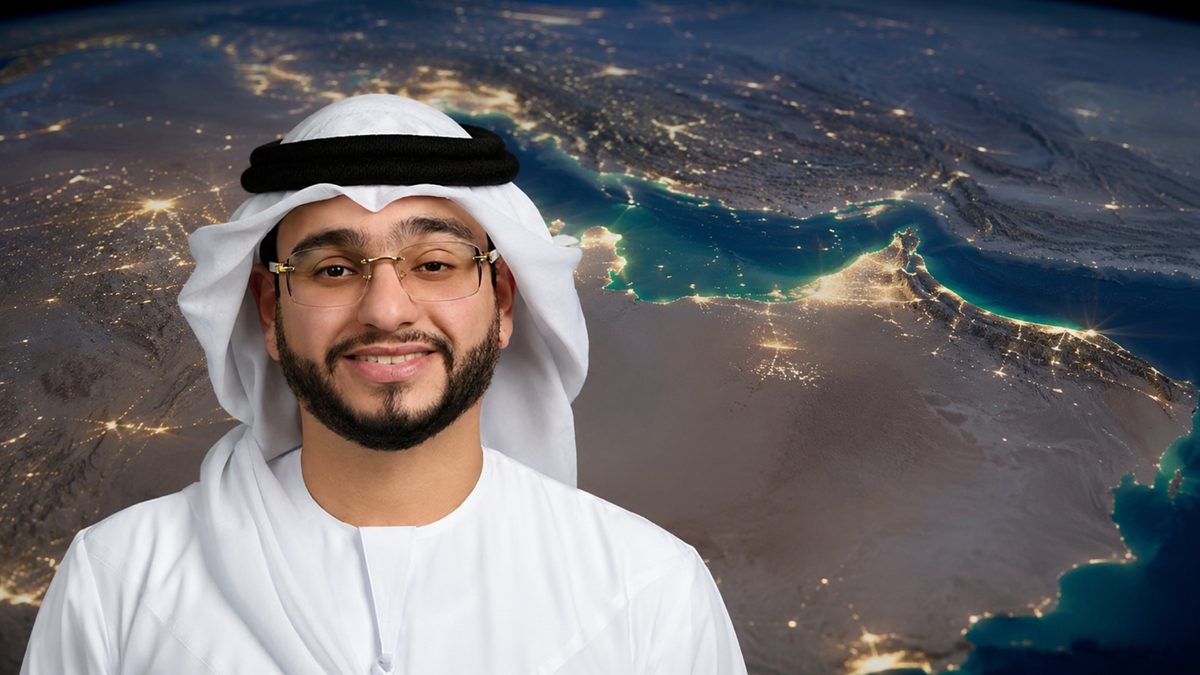
For more than a decade, the United Arab Emirates has established itself as one of the most influential diplomatic actors in the Middle East. Through a foreign policy built on pragmatism, dialogue and the diversification of partnerships, Abu Dhabi now plays a growing role in major regional and international matters: mediation, regional security, economic diplomacy, innovation, artificial intelligence, and the training of future diplomatic elites.
Against a backdrop marked by the ceasefire between the United States, Israel and Iran, the ongoing negotiations over regional security and Iran’s nuclear programme, and the profound geopolitical realignments underway across the Middle East, the UAE appears more than ever as a balancing power, committed to regional stability and dialogue. At the same time, French-Emirati relations have never been closer, whether in defence, the economy, culture, higher education or innovation.
To discuss his career, the mission of the Anwar Gargash Diplomatic Academy, the UAE’s diplomatic ambitions and the region’s major strategic challenges, Le Diplomate Média had the honour of speaking with His Excellency Dr. Mohammed Ibrahim Al Dhaheri, Deputy Director-General of the Anwar Gargash Diplomatic Academy and Advisor at the Office of the Minister of Foreign Affairs of the United Arab Emirates. A graduate in strategy, diplomacy and strategic foresight, he plays an active role in shaping the UAE’s diplomatic vision and in advancing the Academy’s international standing.
Interview conducted by Roland Lombardi
Le Diplomate: Your career sits at the crossroads of diplomacy, strategy and foresight. What have been the main milestones in your career, and how have they shaped your vision of international relations?
Dr. Mohammed Ibrahim Al Dhaheri: I would not describe my career as one single track. I started in the foreign service at a moment when the Ministry itself was changing, moving away from a purely reactive style of diplomacy towards something more deliberate and forward-looking. That pivot left a mark on me early on.
At some point I decided I wanted to understand that shift properly, not just live through it, which is what took me towards a PhD in Management and Strategic Foresight, and later postgraduate work in London and executive programmes at Harvard, Berkeley and Duke. People sometimes assume foresight is a fairly abstract, academic exercise. In practice, it is the opposite. It is about asking very concrete questions: what is likely to change in five or ten years, and what should we be doing about it now, while there is still time to act.
That question stayed with me when I became Director of the Strategy and Future Department at the Ministry of Foreign Affairs. Most of diplomacy, understandably, is built around responding to what is in front of you. Our job in that department was almost the reverse: to look past the immediate agenda and ask what the region and the world would look like in ten years, and where the UAE needed to be positioned. Since February 2026 I have advised the Office of the Minister of Foreign Affairs, and I now serve as Deputy Director-General of the Anwar Gargash Diplomatic Academy. I also sit on the Advisory Council of the College of Public Policy at the University of Sharjah, which keeps me close to the academic side of these questions as well.
If there is a single thread running through all of this, it is the belief that diplomacy, strategy and foresight are not three separate disciplines but one continuous practice. A diplomat who does not think strategically will always be one step behind events. And a strategist who is not grounded in diplomatic experience will struggle to translate foresight into workable policy. My own vision of international relations has been shaped by trying to hold those two things together, and by the conviction that the countries best equipped for the future will be those that invest, early and seriously, in the people who will have to manage it.
The Anwar Gargash Diplomatic Academy has today become a regional reference in diplomatic training. What is its mission, what are its ambitions, and how does it prepare future diplomats for a world that has become increasingly complex and multipolar?
At its core, AGDA’s mission is quite simple in theory but considerably more demanding to deliver in practice: to equip Emirati diplomats and international relations professionals with the knowledge, skills and networks they need to represent and advance the UAE’s interests globally, while also serving as a genuine centre of research and thought leadership on foreign policy and diplomatic practice more broadly.
The Academy was established in 2014, and it was renamed in 2021 in honour of Dr. Anwar Gargash, one of the architects of the UAE’s modern diplomacy. That legacy matters to us, because it reminds us that the Academy exists to serve a living tradition of diplomacy, not simply to teach it in the abstract. That means we deliver accredited postgraduate programmes, from diplomacy and international relations to humanitarian action and international law, alongside executive training for diplomats and, increasingly, for government and business leaders who operate in an international environment. We have also built partnerships with leading institutions, including Johns Hopkins University’s School of Advanced International Studies, precisely because we believe diplomatic education is strengthened by exposure to different intellectual traditions.
What I would highlight, given the world we are preparing people for, is our growing emphasis on research and foresight. It is no longer enough to teach the principles of diplomacy as they have traditionally been practised. Our students and executive participants need to be trained to think in scenarios, to anticipate how technology, climate, shifting alliances and economic competition will reshape the conduct of foreign policy over the next decade, not just how to manage the crisis in front of them. That is why our research output, whether on multilateral negotiation, regional security or the practicalities of chairing a conference like COP28, is designed to be genuinely useful to practitioners.
Our ambition is for AGDA to be recognised as more than a national training institution. We want it to be a regional hub where diplomats, scholars and policymakers from different countries can meet, exchange ideas and build the kind of personal trust that no amount of formal negotiation can replace. In a multipolar, unpredictable world, I believe that investment in people, and in the relationships between them, will matter as much as any policy decision.
Relations between the United Arab Emirates and France have continued to strengthen in recent years across diplomatic, military, economic, cultural and academic fields. This was confirmed during the strong and deep collaboration between the French and Emirati armed forces during the US/Iran war. In your view, what are today the main pillars of this strategic relationship, and what new areas of cooperation could still be developed?
France occupies a very special place in the UAE’s foreign policy. It is one of our oldest and most trusted strategic partnerships, built patiently over many decades. That continuity is important, supported by the strong historical dimension to this relationship. France was the first Western country visited by our Founding Father, the late Sheikh Zayed bin Sultan Al Nahyan. More recently, it was also the destination of the first state visit made by His Highness Sheikh Mohamed bin Zayed Al Nahyan after becoming President of the UAE. These are symbolic moments, but they also reflect the importance our leadership has always attached to France.
Of course, defence and security remain central pillars of the partnership. Our military cooperation goes back many years and is built on a high level of confidence, regular operational cooperation and a shared commitment to regional stability. That foundation of trust has allowed the relationship to expand into many other areas.
What I find particularly interesting today is how the partnership is evolving. We are moving beyond a traditional economic relationship towards one based on co-innovation. Artificial intelligence, civil nuclear energy, space, aviation, healthcare and advanced research are becoming major areas of cooperation. France brings exceptional scientific and industrial expertise, while the UAE offers an environment that enables innovation to scale quickly and ambitious projects to move forward.
In my opinion, this is where the greatest opportunities lie. The challenges we face today, from technological disruption to economic transformation, are too complex for any country to address alone. The future of the Emirati-French partnership will therefore be about combining our strengths to develop new technologies, educate the next generation of talent and build solutions that benefit not only our two countries, but the wider international community.
After several months of military tensions between Israel, the United States and Iran, a fragile ceasefire is now in place and negotiations are ongoing. How did the United Arab Emirates experience this crisis, and what role can it play in consolidating lasting peace in the Middle East?
Instability in the Gulf is never an abstract geopolitical question for us. When tensions escalate, we are the first to feel the consequences for our security and the lives of our people. Iran’s attacks against the UAE were unacceptable and a flagrant violation of our sovereignty and of international law. More than 3,000 missiles and drones were launched against our territory and our civilian infrastructure, and our armed forces intercepted over 90% of them. Like any sovereign state, we have the right and the responsibility to protect our territory and our citizens. We defended ourselves, and our restraint was deliberate: the UAE is not a party to this conflict, and we have pressed for a negotiated settlement from the very beginning.
We welcomed the ceasefire because ending hostilities is essential, but we have also been very clear that a ceasefire, on its own, is not a strategy. Unless the underlying drivers of instability are addressed, the region will simply remain vulnerable to another cycle of escalation. Lasting stability requires a broader regional framework, and that is why the UAE has consistently argued that any future security arrangement must include Gulf countries, which are directly affected by these crises. Regional security cannot be designed without the participation of the states whose security is at stake. Any serious framework must address issues such as freedom of navigation, respect for sovereignty, non-interference and credible mechanisms that ensure commitments are fully implemented.
The UAE’s role is to continue advocating for that broader vision. We have always believed that diplomacy is strongest when it is pragmatic. Our objective goes beyond managing crises as they arise; it is to help build regional security arrangements that reduce the likelihood of future conflict. That is a much more demanding task than securing a ceasefire, but it is also the only path towards durable peace.
Negotiations between Washington and Tehran appear to have resumed in various forms. Does the UAE consider that a lasting agreement on Iran’s nuclear programme and regional security is possible today, or does it remain cautious given the uncertainties of the situation?
I am cautiously optimistic because I believe diplomacy and negotiation are always preferable to confrontation, particularly on an issue as consequential as Iran’s nuclear programme and regional security. The fact that discussions have resumed is therefore a positive development.
At the same time, experience tells us that lasting agreements require more than political declarations. They need to be implemented faithfully, supported by effective verification mechanisms and accompanied by continued dialogue. Experience also tells us that a durable framework must be comprehensive. An understanding on the nuclear file alone will not hold if missiles, drones, support for armed groups and maritime security are left aside, because these issues are deeply interconnected.
From the UAE’s perspective, the objective is clear. We support every diplomatic effort that reduces tensions, reinforces respect for sovereignty and international law, protects freedom of navigation and contributes to a more stable regional order. Freedom of navigation, in particular, is not negotiable for us. If negotiations continue in that spirit, there is reason to hope that meaningful progress can be achieved. But diplomacy takes time, and durable peace will ultimately depend on sustained political will from all parties involved.
The United Arab Emirates has developed a distinctive diplomacy, grounded in dialogue with all the major powers – the United States, China, Russia, India and Europe – without a logic of exclusive alignment. Is this policy of balance set to become the model for middle powers in the emerging multipolar world?
I think this approach is becoming more relevant as the international system becomes more complex. We are living in a world where countries are increasingly interconnected, yet strategic competition is intensifying. In that environment, dialogue is essential. Communication should always be preferred to confrontation because it creates the conditions for trust, even when interests differ.
That approach has always been central to us. Our geography has certainly shaped this outlook. We sit at the crossroads of East and West, North and South, and for centuries our region has been a place where people, trade and ideas have met. We have to engage with everyone, to listen carefully and to look for practical solutions.
Sometimes people describe this as a policy of balance or non-alignment. I see it slightly differently. It is about preserving the ability to work with all partners while remaining guided by our national interests and by principles such as stability, dialogue and mutual respect. The world does not benefit when countries are forced to choose between competing blocs. Many of today’s challenges, whether they concern security, technology, climate, health, or the global economy, simply cannot be addressed that way.
Will this become the model for every middle power? That is for each country to decide according to its own history and circumstances. But I do believe that countries capable of building bridges and maintaining dialogue with different partners will become increasingly valuable. As uncertainty grows, so does the need for trusted interlocutors who can help create common ground.
The UAE is investing massively in disruptive technologies, artificial intelligence, higher education and the knowledge economy. To what extent do you believe that tomorrow’s power will rest as much on innovation, education and human capital as on traditional military capabilities?
We sometimes create a false distinction between innovation and traditional forms of power. If you look at history, every major evolution in military capability has been driven by advances in science, technology and human knowledge. What changes over time are the technologies themselves, not the principle.
That is why the UAE has invested so heavily in education, research and innovation over the past decades. We understood early on that preparing for the future meant diversifying our economy and developing our human capital. At the end of the day, technology does not create itself. It comes from people, from researchers, entrepreneurs, engineers and students. Investing in them is an investment in our long-term resilience and sovereignty.
Artificial intelligence is a good example. It will undoubtedly transform national security, but it will also reshape healthcare, education, agriculture, energy and almost every sector of the economy. Reducing AI to a military tool would therefore be a mistake. Its real significance lies in its capacity to improve societies and create new opportunities for economic development and international cooperation.
That is also why partnerships matter. No country will lead in these technologies on its own. The UAE has chosen to work with trusted partners, including France, because innovation advances much faster when countries combine their respective strengths. We see technology as a means of creating prosperity, strengthening resilience and solving common challenges responsibly.
Finally, the Middle East has been undergoing a profound strategic realignment for several years now. In your view, what is the United Arab Emirates’ vision for the region looking towards 2035, and what role does your country intend to play in building a space that is more stable, more prosperous, and more oriented towards international cooperation?
Given how fast global dynamics are changing, it would be difficult to offer a precise picture of the region in 2035. What I can share is the direction the UAE is working towards, which is consistent with the principles that have guided our foreign policy and that are reflected in our national vision, "We the UAE 2031," and in the longer horizon of our Centennial 2071 plan.
Our starting point is that stability in the region will not come from managing crises one at a time. It will come from building the structures, economic, diplomatic and security-related, that make escalation less likely in the first place. That means continuing to invest in regional economic integration, in diversified and resilient economies less exposed to shocks, and in security arrangements that include the voices of the Gulf states whose stability is directly at stake. It also means continuing to widen the circle of peaceful coexistence and practical cooperation across the region, on the understanding that economic interdependence, done carefully, is one of the strongest guarantees against conflict.
I would add that the UAE does not see this as a project it can carry out alone, nor would we want to. Our approach has always been to work with partners, whether within the Gulf, across the wider region, or with countries such as France that share an interest in a stable and prosperous Middle East. The role we intend to keep strengthening between now and 2035 is that of a reliable and constructive partner: a country that keeps channels of dialogue open even in difficult moments, and one that continues to champion, patiently and consistently, a regional order built on sovereignty, international law and cooperation. That is a demanding ambition, but it is the vision we are working towards, and I believe it is achievable.
#France, #MohammedIbrahimAlDhaheri, #AnwarGargashDiplomaticAcademy, #DialogueInternational, #Iran, #Israël